+919216659657 sales@aecl.in
Endotoxin Risks

Endotoxin Risks

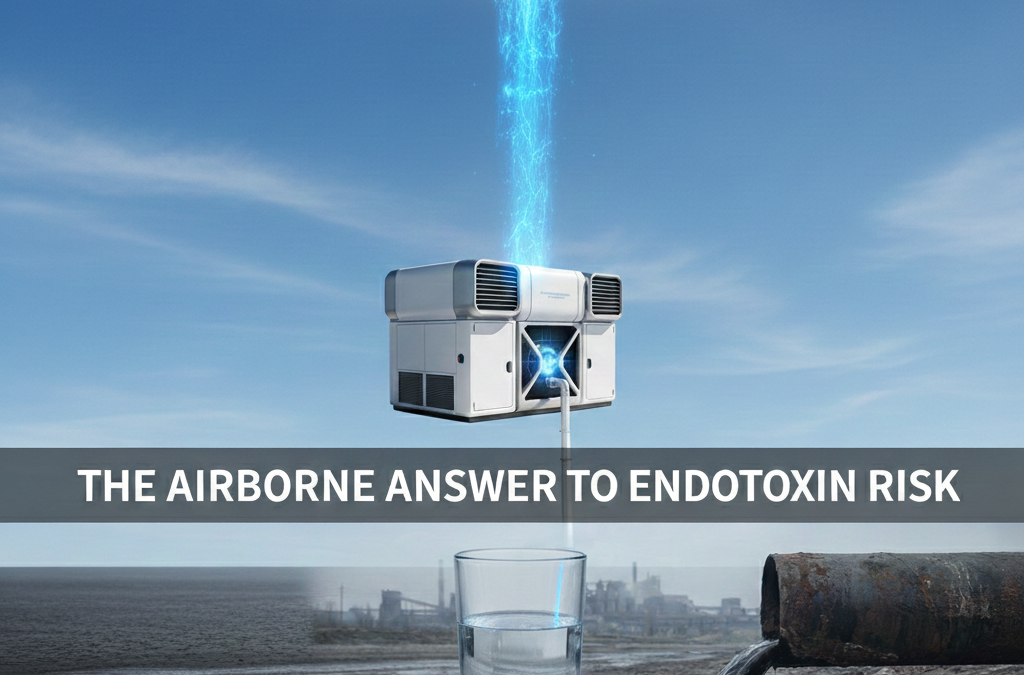
The Invisible Siege on Vaccine Safety: Groundwater Contamination, Endotoxin Risks, and the Paradigm Shift to Atmospheric Water
ntroduction: The Criticality of the First Ingredient

In the ultra-high-stakes world of vaccine manufacturing, there is one raw material that surpasses all others in volume and critical importance: Water. It is the universal solvent, the cleaning agent, the steam source, and, most critically, the primary component of the final injectable product.

For biopharmaceutical engineers and facility directors, water quality isn’t just a spec sheet parameter; it is the bedrock of patient safety and regulatory compliance. Achieving Water for Injection (WFI) standards is a relentless battle against thermodynamics, chemistry, and microbiology.

For decades, the industry has relied on a seemingly infinite resource: groundwater. We drill, we pump, and then we build massive, energy-hungry cathedrals of filtration to torture that ground water into purity.

But the ground beneath our feet is changing. Aquifers are becoming stressed, depleted, and increasingly, a sink for the chemical and biological detritus of modern civilization. For facilities manufacturing life-saving vaccines, reliance on groundwater is no longer just an engineering challenge; it is an escalating risk management crisis.

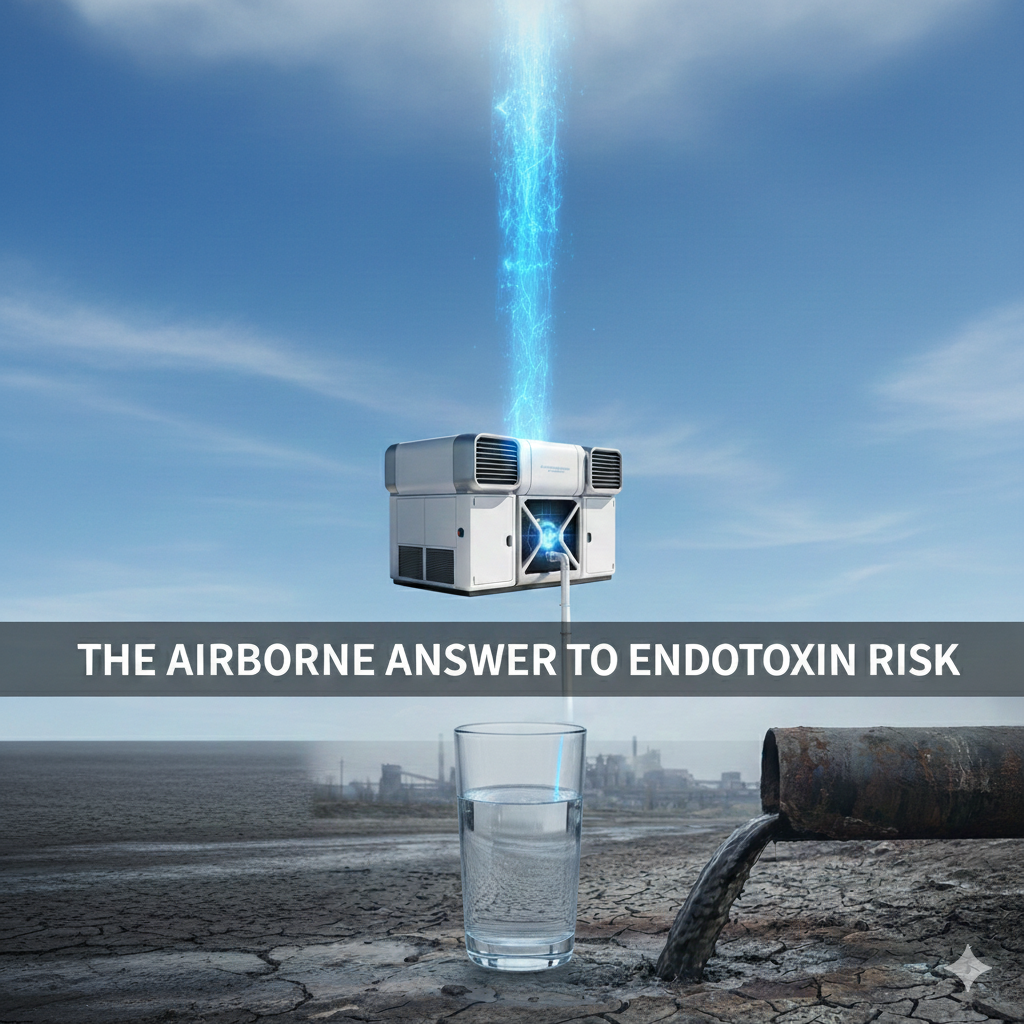
This article takes a hard, technical look at the specific dangers lurking in groundwater—with an urgent emphasis on the difficult-to-destroy endotoxins that threaten vaccine batches. We will analyze the hidden economic and environmental costs of traditional purification and introduce the necessary paradigm shift: severing the connection to the ground and sourcing water from the cleanest aquifer on earth— the atmosphere.


Section 1: The Crisis Below – The Escalating Fragility of Groundwater Source

Groundwater was once considered a pristine source, naturally filtered by layers of soil and rock. That assumption is now dangerously outdated.

As global populations swell and industrial activity intensifies, subterranean water sources are under siege from two directions: depletion and contamination.

1.1 The Concentration Effect of Depletion

Many pharmaceutical hubs are located in water-stressed regions. As aquifers are over-drafted for municipal, agricultural, and industrial use, water tables drop. This depletion doesn’t just mean there is less water; it means the remaining water is often of poorer quality.

As water levels fall, concentrations of naturally occurring minerals (hardness, silica, arsenic) increase. Deeper wells often tap into ancient, brackish water, causing total dissolved solids (TDS) levels to spike unpredictably. A sudden doubling of feedwater TDS can overwhelm pretreatment reverse osmosis (RO) systems, leading to breakthrough and downstream contamination of polishing steps like Electrodeionization (EDI) or distillation units.

1.2 The Anthropogenic Cocktail

Far more concerning than natural minerals is the anthropogenic fingerprint on groundwater. Everything we release on the surface eventually migrates downward.

  • Agricultural Runoff: Nitrates, phosphates, and persistent pesticides seep into shallow aquifers used by many industrial parks.

  • Industrial Solvents: Trace amounts of volatile organic compounds (VOCs) and “forever chemicals” like PFAS (per- and polyfluoroalkyl substances) are increasingly being detected in groundwater globally. These compounds are notoriously difficult to remove and require expensive, high-maintenance activated carbon pre-treatment, which itself becomes a breeding ground for bacteria.

  • Emerging Contaminants: Pharmaceuticals, hormones, and personal care products flushed down drains are bypassing municipal treatment and entering the groundwater cycle.

For a standard manufacturing plant, these are headaches. For a vaccine facility requiring sterile WFI, they are potential catastrophes.


Section 2: The Stealth Threat in Pharma – Pathogens and the Endotoxin Nightmare

The primary focus of pharmaceutical water treatment is microbiology. While chemical purity is essential, biological contamination is immediate and deadly in an injectable product.

When sourced from groundwater, the bio-burden load is highly variable and often spikes after heavy rains or seismic activity disturbs the aquifer. While traditional pre-treatment aims to kill living bacteria, it often exacerbates the darker, more insidious problem: endotoxins.

2.1 The Difference Between Living and Dead Threats

Most facility engineers are comfortable dealing with viable bacteria (bioburden). You sanitize the loop, use UV lamps, and maintain continuous turbulent flow.

The greater challenge in vaccine manufacturing is Pyrogens, specifically Bacterial Endotoxins.

Endotoxins are lipopolysaccharides (LPS) that form the outer cell wall of Gram-negative bacteria (like E. coli, Pseudomonas, etc.). These bacteria thrive in groundwater, soil, and notoriously, in the pre-treatment stages of water systems (like carbon filters and softeners).

Here is the critical distinction: Endotoxins are not alive. They are the debris left behind when bacteria die or multiply.

Why Endotoxins are the Engineer’s Nightmare:

  1. Heat Stability: Unlike living bacteria, you cannot simply boil endotoxins away. They remain stable at standard autoclaving temperatures (121°C). Destroying them via heat requires depyrogenation temperatures exceeding 250°C for extended periods—an incredibly energy-intensive process feasible only for glassware, not for bulk water storage.

  2. Size and Filtration Evasion: Endotoxin molecules can aggregate into large micelles, but individual units are extremely small (down to 10,000 Daltons). They can pass through standard 0.2-micron sterilizing grade filters used to catch live bacteria.

  3. The Consequences in Vaccines: If endotoxins enter an injectable vaccine, they trigger a severe, sometimes fatal, immune response in the patient—fever, shock, and organ failure. This is a “pyrogenic response.”

2.2 The Groundwater Connection to Endotoxin Spikes

Groundwater is naturally rich in Gram-negative bacteria. When an industrial facility pumps this water and subjects it to chlorination or other biocidal treatments at the intake, they successfully kill the bacteria.

However, in killing millions of bacteria simultaneously, the treatment process causes massive cell lysis, releasing a sudden, concentrated “bloom” of free endotoxins into the feedwater.

Traditional WFI generation systems (like vapor compression distillation or multi-effect stills) are designed to remove endotoxins through phase change. However, they are rated for a certain log-reduction. If the incoming feedwater from a contaminated groundwater source has an unprecedented spike in endotoxin load, it can challenge the distillation units to their breaking point.

Furthermore, any breach in pre-treatment RO membranes, or trace contamination in storage tanks prior to distillation, creates a persistent endotoxin issue that is incredibly difficult to trace and eradicate.

A vaccine batch testing positive for endotoxins above the USP limit is an immediate write-off. The financial loss is in the millions; the reputational damage is incalculable; the risk to patient supply chains is unacceptable.


Section 3: The Unsustainable Economics of Purifying Poison
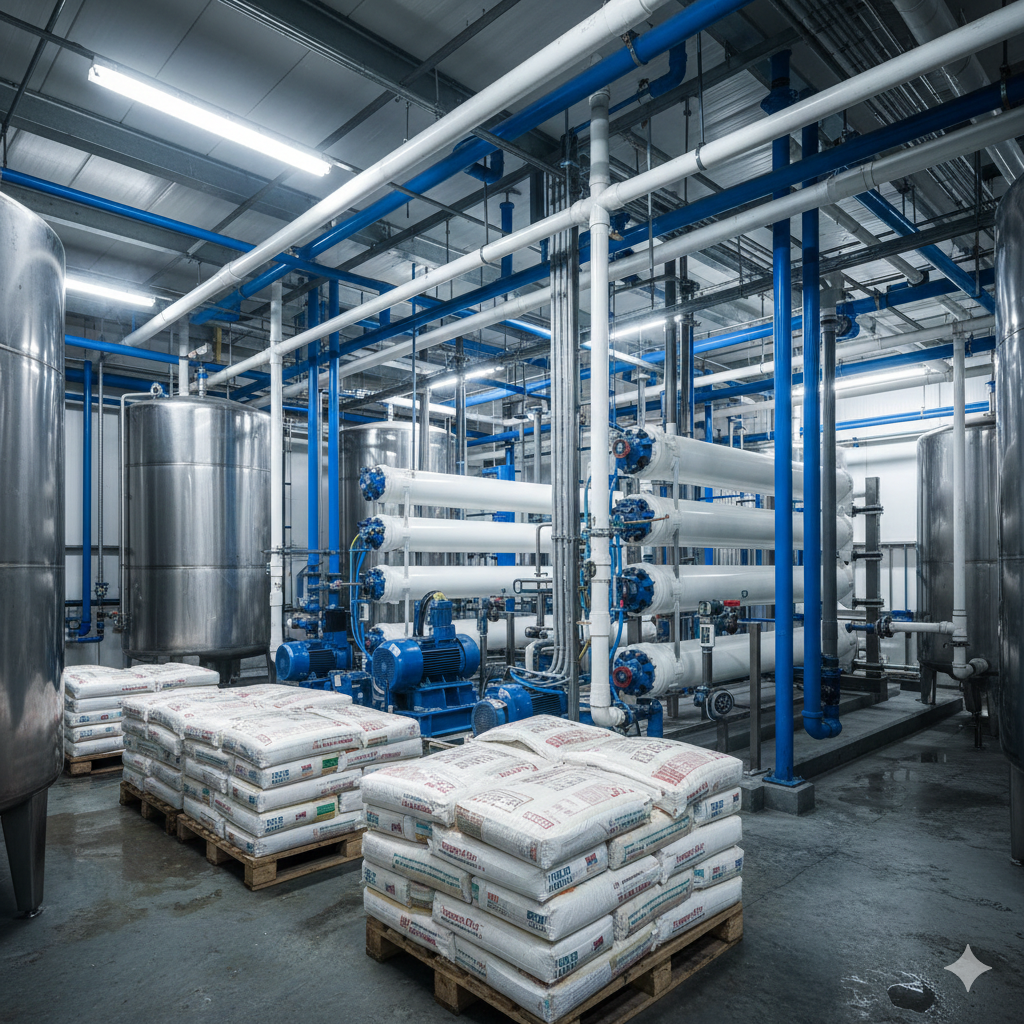
To turn increasingly contaminated groundwater into WFI, facilities are forced to build higher, more complex defensive walls. The total cost of ownership (TCO) of these traditional water systems is skyrocketing, hidden in energy bills, maintenance logs, and waste hauling manifests.

3.1 The Energy Penalty

The thermodynamics of purification are brutal.

  • Distillation is King, but costly: The gold standard for WFI is distillation because it reliably separates water from non-volatiles like endotoxins. However, boiling thousands of liters of water an hour requires enormous amounts of steam, usually generated by natural gas boilers. It is often the single largest energy consumer in a pharma facility.

  • High-Pressure Pumping: Before distillation, groundwater must go through RO. High TDS groundwater requires higher pressure pumps to overcome osmotic pressure, driving up electricity usage significantly.

3.2 The Maintenance and Chemical Treadmill

A fluctuating groundwater source means constant tweaking of the pre-treatment train.

  • Chemical Reliance: To protect RO membranes from scaling due to groundwater hardness, facilities consume vast quantities of salt for softeners or anti-scalant chemicals. To combat bio-growth, various biocides are used. To remove chlorine before the RO, sodium metabisulfite is injected. This is a massive chemical procurement and storage undertaking.

  • Membrane Fouling and Replacement: Groundwater rich in organics and colloids fouls RO membranes rapidly. This necessitates frequent Clean-In-Place (CIP) cycles using aggressive acids and caustics, which shortens membrane life and leads to expensive replacements and production downtime.

3.3 The Environmental Burden: The Reject Water Problem

Perhaps the most overlooked aspect of traditional water treatment is its inefficiency. To make pure water, you must waste water.

For every gallon of purified water produced via a standard RO setup operating on challenged groundwater, roughly 25% to 40% of the feed water becomes “reject” or concentrate stream.

This isn’t just water; it’s hazardous brine. It contains 100% of the contaminants removed from the product water, concentrated into a smaller volume, plus all the added anti-scalants and treatment chemicals.

  • High TDS Pollution: Discharging this high-salinity waste into municipal sewers is increasingly regulated and expensive. In some jurisdictions, it requires on-site evaporator crystallizers to achieve Zero Liquid Discharge (ZLD), adding another massive layer of CAPEX and OPEX.

  • The Water Footprint: In an era of water scarcity, wasting 40% of the water you pump just to clean the other 60% is environmentally indefensible.


Section 4: The Paradigm Shift – Atmospheric Water Generation (AWG)

If groundwater is becoming a reliability liability, what is the alternative?

The answer lies in changing the source entirely. The atmosphere contains an estimated 37.5 million billion gallons of water vapor. It is a replenishable, mobile aquifer that naturally bypasses terrestrial ground contamination.

At Advance Engineers, we are pioneering the integration of industrial-scale Atmospheric Water Generators (AWGs) into critical applications like vaccine manufacturing.

4.1 Bypassing the Ground: The Ultimate Pre-Treatment

An AWG is essentially a highly sophisticated dehumidifier optimized for water production. It pulls in ambient air, filters it to remove particulates, passes it over chilled coils to condense the vapor into liquid water, and then subjects that water to immediate purification.

By sourcing from the air, we eliminate the primary vectors of risk discussed above:

  • No Agricultural Runoff: Air doesn’t contain nitrates or pesticides in meaningful quantities.

  • No Subterranean Mineral Spikes: The water starts with very low TDS (essentially distilled by nature).

  • Dramatically Lower Bio-burden: While air contains bacteria, the load is vastly lower and less variable than groundwater sources, and significantly lower in Gram-negative bacteria that cause endotoxin issues.

4.2 AWG as the Ideal Feed for WFI Systems

We are not suggesting AWG product water is injectable straight from the machine. WFI requires rigorous, validated distillation or membrane processes defined by USP/EP pharmacopeias.

However, AWG water is the perfect feed water for those WFI stills.

By providing a consistent, low-TDS, low-endotoxin feed stream to a Vapor Compression Distiller, you achieve:

  1. Reduced Energy Consumption: The distiller works less hard, reducing scaling and blowdown frequency.

  2. Simplified Pre-treatment: You can potentially eliminate water softeners, massive carbon beds, and primary RO passes, shrinking the facility footprint and removing areas where bacteria breed.

  3. Risk Mitigation: You remove the “spike variable.” You no longer have to worry about what a heavy rainfall event did to the aquifer five miles away. The input quality is stable.


Section 5: Sustainability and the Future of Our Generations

Adopting AWG technology is not just an engineering decision; it is a statement of corporate values.

Pharmaceutical companies have a dual obligation: to provide life-saving medicines today, and to ensure a habitable world for the patients of tomorrow.

Continuing to exploit stressed groundwater aquifers for industrial processes, while simultaneously polluting water systems with high-TDS reject streams, is antithetical to modern Environmental, Social, and Governance (ESG) goals.

By adopting Atmospheric Water Generation, a facility:

  • Decouples growth from local water stress: You become water-independent, ensuring business continuity even during droughts or municipal water crises.

  • Eliminates reject water pollution: AWG produces no brine discharge.

  • Demonstrates leadership: It signals a commitment to innovative, sustainable technologies that protect our shared natural resources.

This is about securing the future of manufacturing and fulfilling our moral obligation to leave a water-secure planet for the next generation.


The Final Call to Action

The risks of relying on groundwater for vaccine manufacturing are no longer theoretical; they are financial, operational, and ethical ticking time bombs. The threat of endotoxin contamination creates an unacceptable level of risk in an industry where safety is paramount.

The old ways of brute-forcing purity through massive chemical and energy expenditure are becoming obsolete.

Ideally, the purest final product should start with the purest raw material. Air is that material.

Advance Engineers is ready to help your facility assess the feasibility of industrial Atmospheric Water Generation. We can model the energy savings, the risk reduction, and the sustainability benefits of shifting your feedwater source from the ground to the sky.

Stop managing groundwater crises. Start generating pure water security.

Discover how AWG can revolutionize your critical utility strategy. Visit our detailed AWG solutions page to learn more:
https://advance-engineers.com/awg/

The Digital Fortress: A Pharma Engineer’s Comprehensive Guide to Mastering 21 CFR Part 11 Compliance in Automation

The Audit Anxiety in the “Pharmacy of the World”

If you drive through the industrial corridors of Baddi, Nalagarh, or Paonta Sahib—the beating heart of India’s pharmaceutical manufacturing—you will see world-class facilities churning out generics for the global market. Yet, inside the conference rooms of these massive plants, one acronym generates more anxiety than any production target or supply chain delay: USFDA.

For Indian pharmaceutical exporters, the United States Food and Drug Administration (USFDA) audits are the ultimate litmus test. In recent years, the focus of these audits has shifted aggressively from physical hygiene to Data Integrity.

Gone are the days when a wet signature on a paper batch record was enough. Today, your PLC (Programmable Logic Controller) and SCADA (Supervisory Control and Data Acquisition) systems are the primary witnesses to your process quality. If an auditor asks, “Who changed this sterilization setpoint at 3:00 AM?” and your HMI cannot provide a definitive, tamper-proof answer, you are staring down the barrel of a Form 483 observation or, worse, a Warning Letter.

This is where 21 CFR Part 11 comes in.

To the uninitiated, it reads like dry legal text. To the experienced Automation Engineer, it is the blueprint for building a credible, export-ready facility.

At Advance Engineers, we have spent years working with pharma majors in the Chandigarh and Himachal region, helping them bridge the gap between engineering reality and regulatory requirements. We know that compliance isn’t just about buying “Part 11 compliant software”; it’s about how that software is engineered, configured, and validated.

This comprehensive guide is designed for the Plant Head, the QA Manager, and the Automation Engineer. We will strip away the legalese and explore the practical, nuts-and-bolts implementation of 21 CFR Part 11 in your industrial automation systems.


Part 1: De-mystifying the Regulation

Title 21 CFR Part 11 is the FDA’s regulation regarding Electronic Records and Electronic Signatures (ERES).

In simple terms, it states that electronic records (data stored in your SCADA/Historian) and electronic signatures (approvals done via login) are considered just as legally binding and valid as paper records and handwritten signatures—provided specific conditions are met.

The regulation is divided into two main subparts relevant to us:

  1. Subpart B – Electronic Records: How you create, maintain, and archive data securely.

  2. Subpart C – Electronic Signatures: How you ensure that a specific action is irrefutably linked to a specific human being.

Why is this hard? Because standard industrial automation was originally designed for efficiency, not security. A standard HMI lets anyone walk up, press “Start,” and walk away. A standard CSV file export lets anyone open it in Excel, change a value from 80°C to 121°C, save it, and no one would ever know. Part 11 forces us to lock these doors.


Part 2: The Core Pillar—Data Integrity and ALCOA+

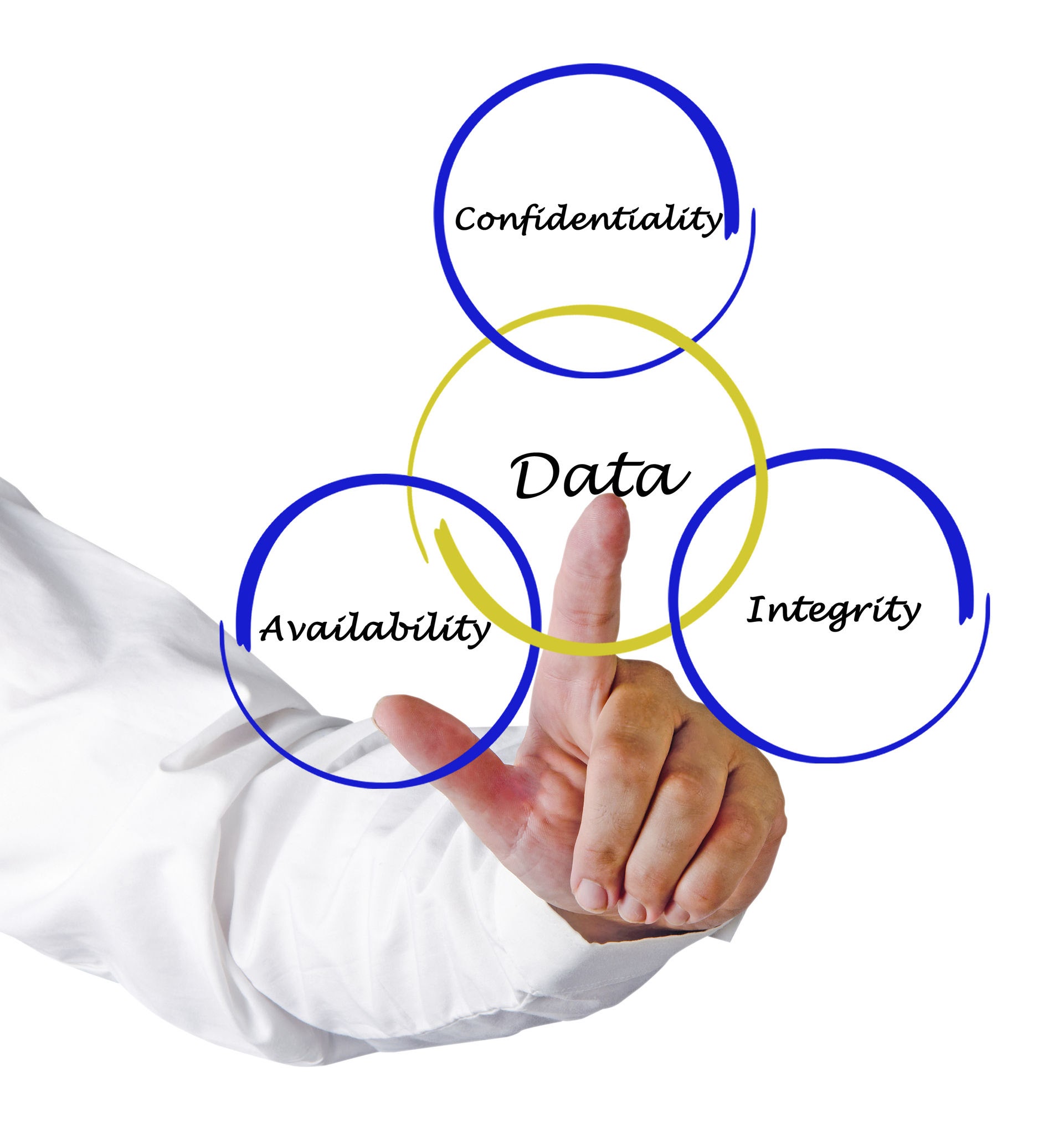
Before diving into the PLC logic, we must understand the philosophy behind the rule: ALCOA+. This is the framework auditors use to judge your system. If your automation solution doesn’t satisfy these principles, it is not compliant.

  • A – Attributable: Every piece of data must be traced back to the person or system that created it. (No generic “Operator” logins).

  • L – Legible: The data must be readable and permanent throughout its lifecycle.

  • C – Contemporaneous: Data must be recorded at the time the event occurred. (No back-dating logs).

  • O – Original: The first capture of data is the source of truth.

  • A – Accurate: The data must be error-free and unaltered.

  • + (Plus): Complete, Consistent, Enduring, and Available.

At Advance Engineers, when we design a SCADA architecture for a Sterile Injectable line or an OSD (Oral Solid Dosage) plant, we essentially build a “Digital Chain of Custody” that satisfies ALCOA+ at every step.


Part 3: Engineering Compliance – The Technical Implementation

This section details how we translate these regulations into actual engineering features within platforms like Siemens WinCC, Rockwell FactoryTalk View SE, or Wonderware System Platform.

1. STRICT Access Control & User Management

The days of a shared HMI password written on a sticky note are over.

  • Individual Accounts: Every operator, supervisor, and maintenance engineer must have a unique User ID.

  • Role-Based Access Control (RBAC): We configure security groups.

    • Operators can View process, Acknowledge alarms, and Start batches.

    • Supervisors can Change Setpoints and Modify Recipes.

    • Maintenance can Access PID tuning parameters.

    • Administrators can Manage users (but NOT run the process—segregation of duties).

  • Password Aging & Complexity: The SCADA system must force password changes every 30-90 days. It must reject simple passwords and lock the account after 3 failed attempts.

  • Auto-Logout: The system must automatically log out an inactive user after a set time (e.g., 10 minutes) to prevent unauthorized access if an operator walks away.

2. The “Black Box”: Audit Trails

This is the single most critical feature for an auditor. An Audit Trail is a secure, immutable chronological record of who did what, when, and why.

A compliant Audit Trail in a SCADA system must capture:

  • Timestamp: Date and Time (synced to a secure NTP server).

  • User ID: Who made the change?

  • Action: What happened? (e.g., “Setpoint Change”).

  • Variable Name: Which tag was affected? (e.g., Autoclave_Temp_SP).

  • Old Value: What was it before? (e.g., “121.0”).

  • New Value: What is it now? (e.g., “121.5”).

  • Reason for Change: This is crucial. The system must force the user to select a reason from a pre-defined list (e.g., “Process Deviation,” “Calibration,” “Batch Change”) or type a manual comment before the value is accepted.

The Advance Engineers Standard: We configure Audit Trails to be “Read-Only” for everyone. Even the Administrator should not be able to delete or edit the audit logs. They are stored in encrypted SQL databases or tamper-evident proprietary file formats.

3. Electronic Signatures (The “Double Handshake”)

For critical actions—like starting a batch, approving a recipe, or acknowledging a critical alarm—a simple click is not enough. The system must demand an Electronic Signature.

This typically involves a pop-up window requiring two distinct identification components:

  1. The User ID (Public).

  2. The Password (Private).

This action essentially says, “I, John Doe, certify that I am authorizing this action at this time.” In our systems, this signature is permanently linked to the record of that batch.

4. Recipe Management and Version Control

Inconsistent batches are a quality nightmare. In a Part 11 compliant system, “Recipes” (the set of parameters defining a product) are locked down tight.

  • Version Control: If a recipe is modified, the system creates a new version (e.g., Version 1.0 -> 1.1).

  • Approval Workflow: A recipe created by a Junior Engineer cannot be used in production until it is electronically signed and “Approved” by a QA Manager.

  • Verification: When a batch starts, the PLC verifies that the loaded recipe matches the checksum of the approved recipe in the database, ensuring no parameters were tweaked in the background.


Part 4: The Danger of “Open Systems” and Data Storage

A common pitfall we see in older plants is the reliance on “Flat Files” like CSV or TXT files for data logging.

The Scenario: A SCADA system logs temperature data to a CSV file on the C: drive. At the end of the shift, the supervisor copies it to a USB stick.

The Compliance Violation: A user could open that CSV file, change a few temperature readings that were out of spec, save the file, and then present it to QA. There is no trace of the alteration. This is a critical data integrity failure.

The Solution: We implement Database-Centric Architectures.

  • SQL Server with Security: Data is logged directly into an SQL database. The database is password protected, and permissions are set so that only the SCADA Service Account can Write data. Human users have Read-Only access.

  • Encrypted Historians: We use specialized Historian software (like OSIsoft PI, FactoryTalk Historian, or Wonderware Historian) that compresses and encrypts data. It is mathematically impossible to modify a historical value without breaking the file’s integrity signature.


Part 5: Computer System Validation (CSV) and GAMP 5

Buying compliant software is only 50% of the battle. The other 50% is proving that it works. This is called Computer System Validation (CSV).

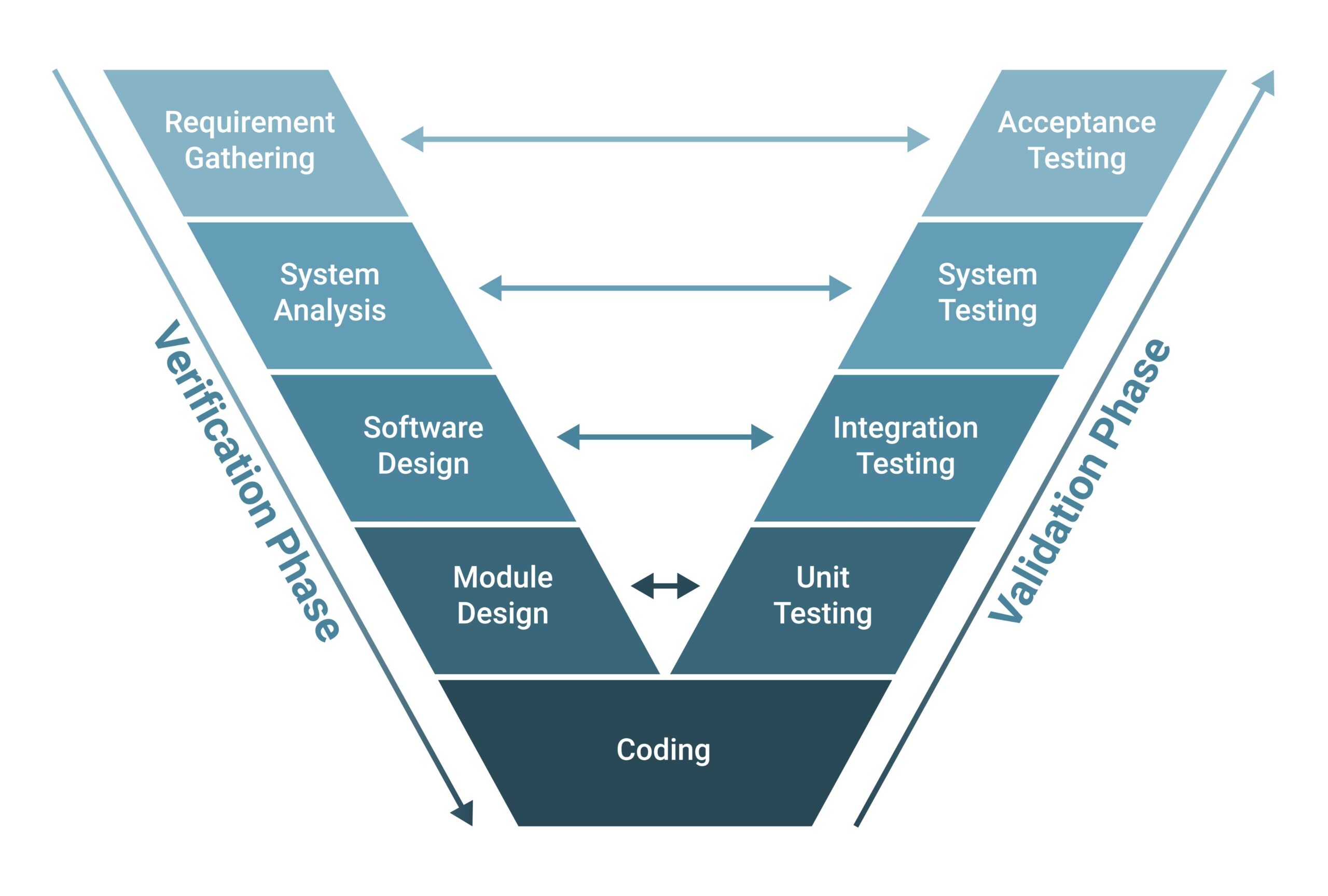
The pharmaceutical industry follows the GAMP 5 (Good Automated Manufacturing Practice) guide using the V-Model.

At Advance Engineers, we don’t just hand over the code; we provide the full documentation stack required for your validation master plan:

  1. URS (User Requirement Specification): Helping you define exactly what the system must do.

  2. FS/DS (Functional & Design Specifications): Documenting how our code meets your URS.

  3. IQ (Installation Qualification): Verifying the hardware is installed correctly and the software is the correct version.

  4. OQ (Operational Qualification): Testing every alarm, interlock, and security feature. (e.g., We deliberately try to log in with a wrong password to prove the system locks us out).

  5. PQ (Performance Qualification): Verifying the system works under real production load.

  6. Traceability Matrix: A document linking every Requirement -> Design Element -> Test Case.

Without this paperwork, your sophisticated SCADA system is just a “black box” to an auditor.


Part 6: Retrofitting Legacy Systems for Compliance

Many plants in India are running older machines that work perfectly mechanically but lack digital compliance.

Do you need to throw away the machine? No.

We specialize in “Compliance Retrofits.” We can install a “SCADA Overlay” or a “Data Integrity Gateway.”

  • We leave the existing PLC logic for machine control largely untouched (to minimize re-validation of the process).

  • We add a new, modern HMI/SCADA layer on top that handles User Management, Audit Trails, and Reporting.

  • We disable the local operator controls on the old panel and route all critical inputs through the compliant HMI.

This approach saves you the cost of a new machine while bringing you up to 21 CFR Part 11 standards.


Part 7: The Advance Engineers Advantage

Why trust Advance Engineers with your compliance?

  1. Local Presence, Global Standards: Based in Chandigarh, we are minutes away from the major pharma hubs of Punjab and Himachal. We understand the local operational challenges but engineer to US/EU standards.

  2. Multi-Platform Expertise: Whether your plant runs on Siemens, Rockwell, Mitsubishi, or Schneider, we have the in-house drivers and expertise to unify them into a compliant reporting structure.

  3. IT/OT Convergence: We don’t just know PLCs; we know Databases, Networking, and Server Security. We bridge the gap between your shop floor and your IT department.


Conclusion: Compliance is a Culture, Not Just Code

21 CFR Part 11 is often viewed as a burden. However, when implemented correctly, it is a tool for excellence.

A compliant system doesn’t just satisfy an auditor; it gives you confidence.

  • Confidence that your batch records are accurate.

  • Confidence that your recipes are followed exactly.

  • Confidence that if a failure occurs, you can trace the root cause instantly.

In the high-stakes world of pharmaceuticals, “Data Integrity” is synonymous with “Product Safety.” There is no room for ambiguity.

Don’t let your next audit be a source of fear. Turn your automation data into your strongest asset.


Call to Action

Is Your Facility Audit-Ready?

Don’t wait for a Form 483 to reveal gaps in your data integrity.

At Advance Engineers, we offer a comprehensive Data Integrity Audit. Our experts will review your existing automation systems, identify compliance risks, and propose a practical roadmap to full 21 CFR Part 11 compliance.

Let’s build a system that auditors trust.

Schedule a Compliance Consultation with Our Experts

From Sensors to the Cloud: The Ultimate Guide to Selecting an Industrial IoT (IIoT) System

From Sensors to the Cloud: The Ultimate Guide to Selecting an Industrial IoT (IIoT) System

Introduction: Navigating the “Internet of Things” Jungle

“IoT” is perhaps the most overused buzzword in manufacturing today. For a plant manager in Ludhiana or a process engineer in Baddi, the term often conjures vague images of iPads controlling conveyor belts. But in reality, Industrial IoT (IIoT) is about one specific goal: Data Granularity.

The difference between a standard automation system and an IIoT system is simple.

  • Standard System: Tells you the motor is running.

  • IIoT System: Tells you the motor is running at 45°C, vibrating at 3mm/s, and consuming 12.5 Amps.

However, the market is flooded with gadgets ranging from ₹500 Wi-Fi chips to ₹5,00,000 Edge Controllers. How do you select the right architecture?

At Advance Engineers, we believe the selection process shouldn’t start with the “Cloud”; it must start at the “Sensor.” This guide breaks down the selection hierarchy from basic connectivity to high-end enterprise integration.

Level 1: The Foundation – Field Connectivity (Basic to Smart)

Before you can analyze data, you must capture it. The selection of your field devices determines the quality of your data.

The Old Way: Analog (4-20mA) & Digital I/O

  • What it is: The industry standard for decades. A sensor sends a simple voltage or current signal to the PLC.

  • Pros: Extremely robust, simple to troubleshoot.

  • Cons: It is “dumb” communication. If a wire breaks or a lens gets dirty, the signal just drops to zero. You get data, but no diagnostics.

  • When to select: For simple, non-critical status checks (e.g., tank level, door open/close) where advanced analytics aren’t needed.


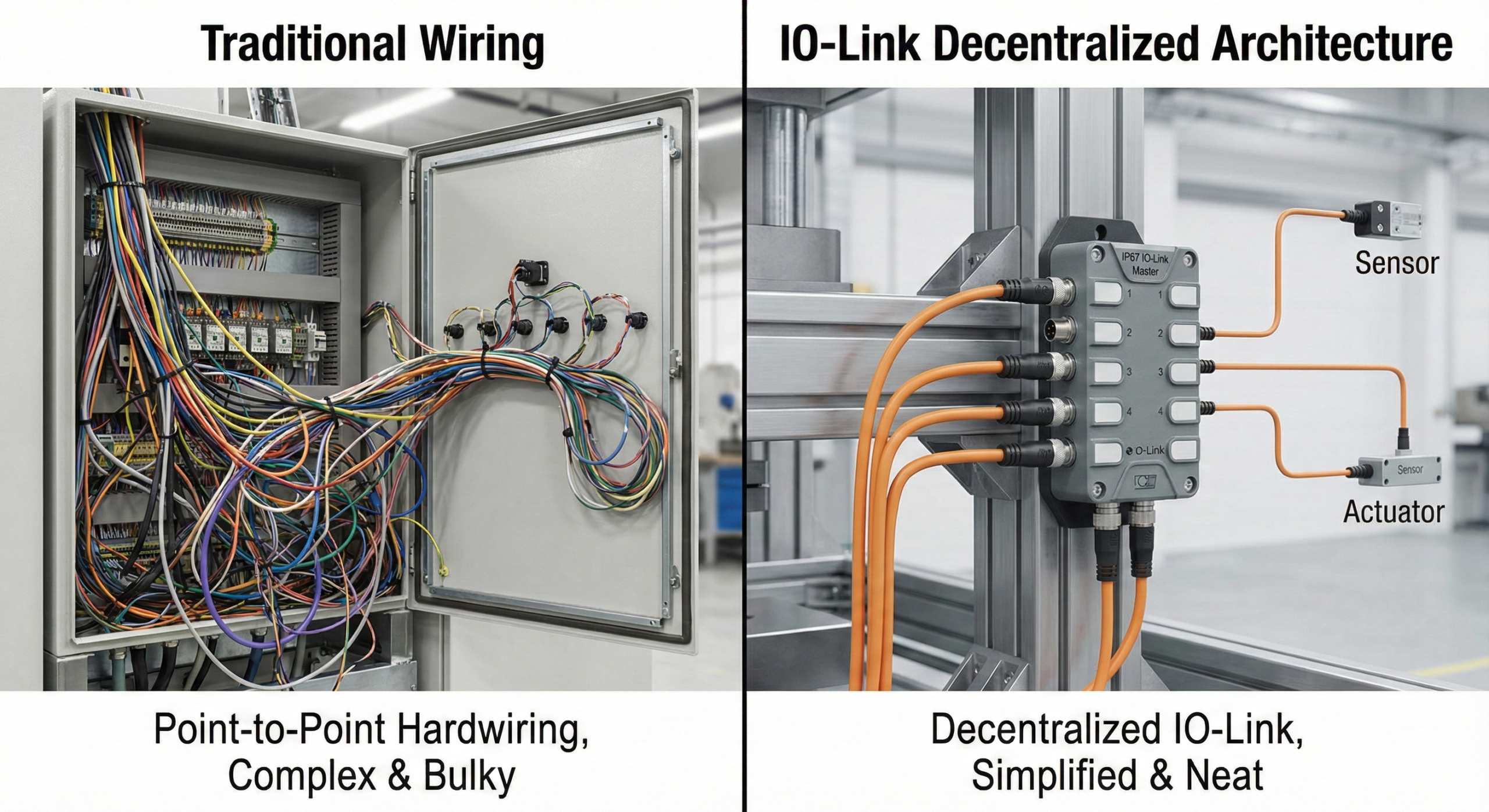
The Upgrade: IO-Link (The “USB” of Automation)

  • What it is: A point-to-point communication protocol that uses the same standard 3-wire cables but transmits digital data packets.

  • Why select it: This is the entry point for IIoT. An IO-Link photo-eye doesn’t just tell you “Object Detected”; it tells you “Signal Strength Weak (Lens Dirty)” or “Sensor Overheating.”

  • Advance Engineers Recommendation: For any new machine build, specify IO-Link masters. It minimizes cabling costs and maximizes diagnostic visibility without needing a high-end IT infrastructure.

Level 2: The Gateway – Getting Data Out of the Machine

Once the data is in the PLC or local sensor network, how do we move it? This is where the “Communication” layer comes in.

Basic: Serial to Ethernet Gateways

  • Technology: Modbus RTU (RS485) to Modbus TCP.

  • Application: Ideal for retrofitting older energy meters or VFDs that only speak serial languages.

  • Selection Criteria: Choose this if you are budget-constrained and simply need to log basic parameters (like Energy kWh) once every minute.

Mid-Range: Protocol Converters (The “Translator”)

  • Technology: Converting Profinet/EthernetIP to a neutral format.

  • Application: Your machine runs on Siemens (Profinet), but your upper-level software speaks Allen Bradley (Ethernet/IP).

  • Selection Criteria: Essential for mixed-vendor plants. Look for gateways that support OPC UA, as this creates a secure, standardized bridge for data.

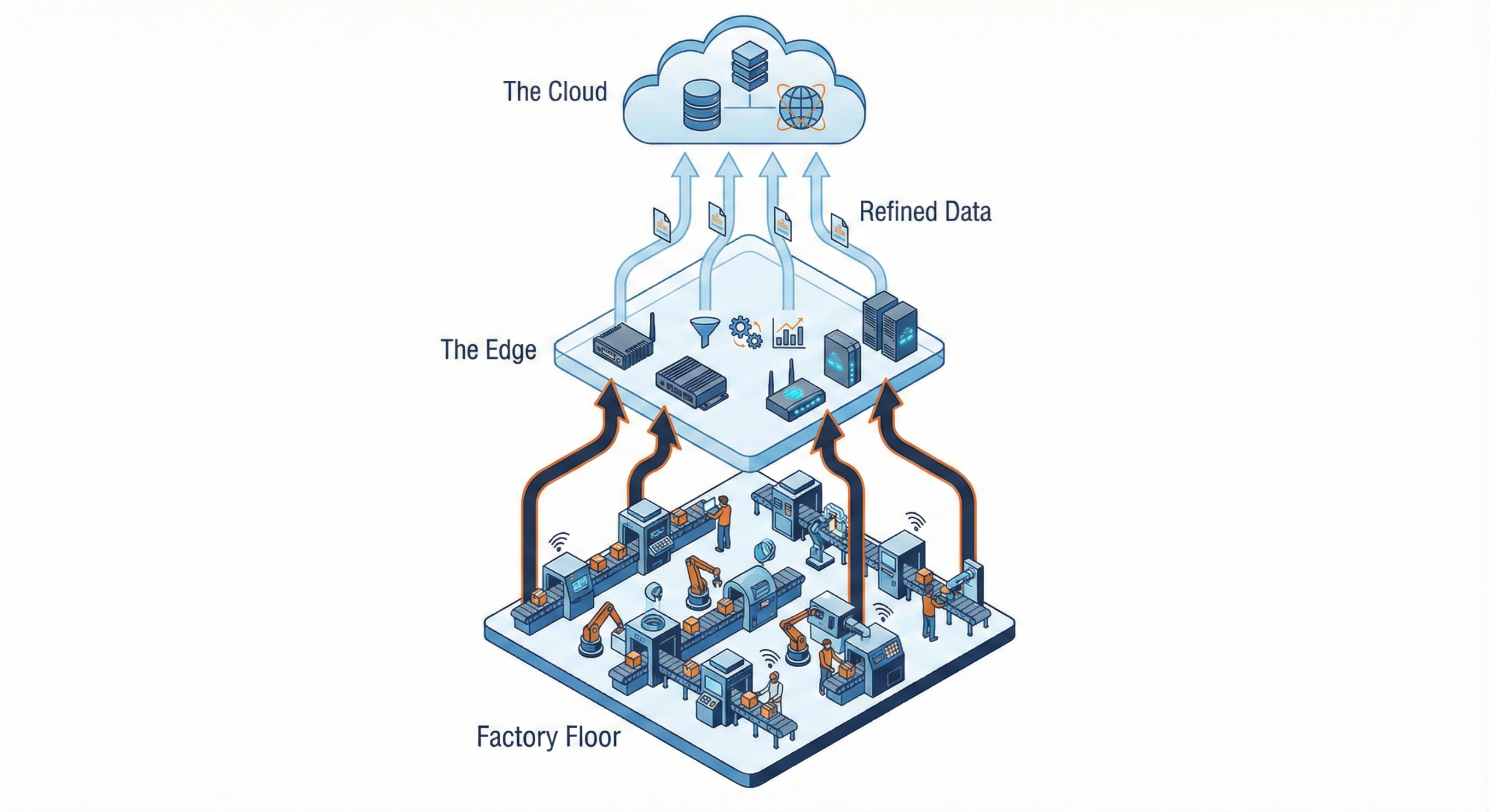
High-End: Edge Controllers

  • Technology: Industrial PCs (IPCs) or Linux-based Controllers (e.g., Raspberry Pi Compute Module Industrial versions, Siemens Industrial Edge).

  • Application: Running logic and data processing simultaneously.

  • Why select it: If you need to process data before sending it (e.g., analyzing vibration capabilities at 10,000 Hz to detect bearing failure), a simple gateway will crash. You need an Edge Controller to “crunch” the numbers locally and only send the result (“Bearing OK”) to the server.

Level 3: The Transport – Communication Protocols

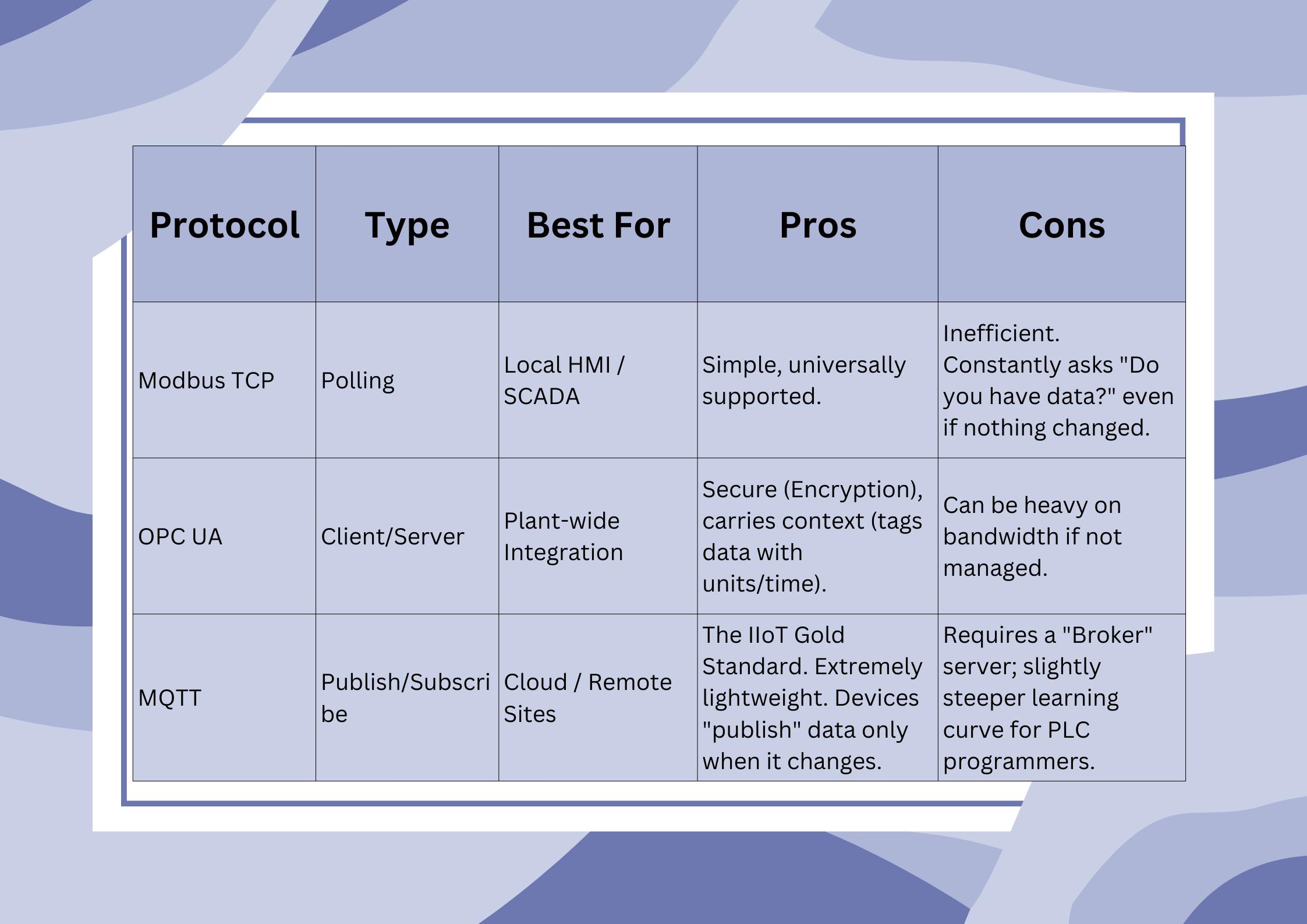
This is the language your system uses to talk to the server or cloud. Selecting the wrong protocol is the #1 cause of network congestion.

Selection Rule of Thumb:

  • Inside the machine (Real-time control) → Use Profinet / EtherCAT.

  • Machine to Plant Server (SCADA) → Use OPC UA.

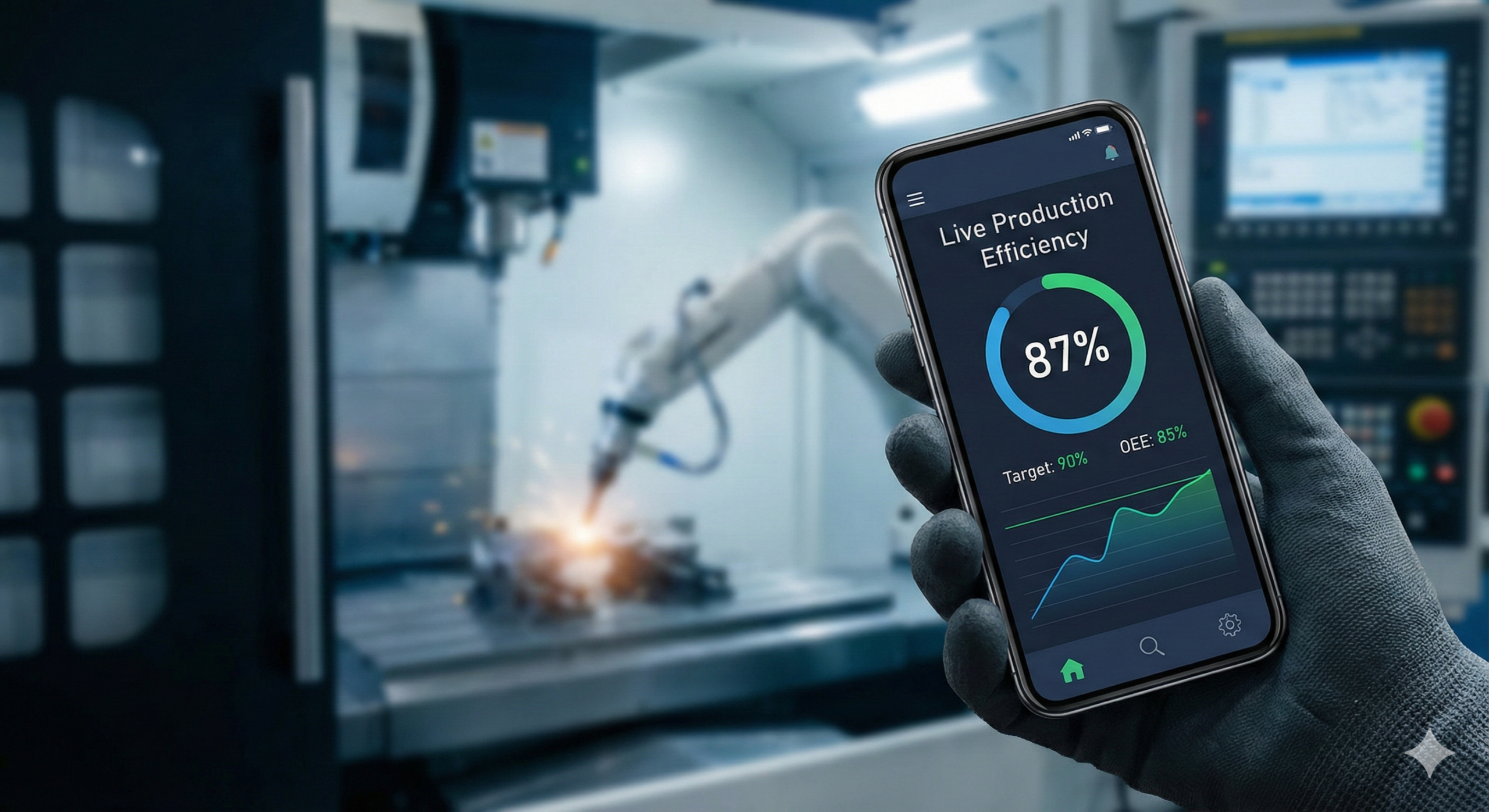
  • Plant to Cloud / Remote Dashboard → Use MQTT.

Level 4: The Destination – On-Premise vs. Cloud

Where does the data go?

On-Premise Server (Local)

  • Setup: A physical server rack sitting in your IT room.

  • Best for: Companies with strict data privacy policies (e.g., Defense, Pharma) or unreliable internet connections.

  • Advance Engineers Service: We design SCADA systems with local Historians that give you 100% control over your data without a monthly subscription.

Cloud Dashboards (AWS / Azure / Proprietary)

  • Setup: Data is sent securely over the internet to a cloud platform.

  • Best for: Multi-site operations. If you have a plant in Mohali and another in Gujarat, the Cloud allows the CEO to view both on a single dashboard on their phone.

  • Selection: Look for platforms that support “Store and Forward.” If the internet cuts out, the local gateway buffers the data and uploads it automatically when the connection is restored.

Summary Checklist: How to Choose?

When Advance Engineers consults on an IIoT project, we ask these four questions to determine the system “Level”:

  1. Latency: Do you need to know about the data in milliseconds (Motion Control) or minutes (Tank Level)?

    • Milliseconds = Edge Computing.

    • Minutes = Cloud Gateway.

  2. Volume: Are we tracking 50 tags or 5,000 tags?

    • High volume requires MQTT to prevent network crashes.

  3. Environment: Is the hardware going into an air-conditioned IT cabinet or a dusty foundry floor?

    • Foundry = IP67 Ruggedized Gateways.

  4. Security: Will the IT department allow this device on the corporate network?

    • If yes, ensure the device supports SSL/TLS encryption (HTTPS).

The Advance Engineers Advantage

Selecting an IIoT system isn’t just about buying a gateway; it’s about architecture. We help you bridge the gap between OT (Operational Technology) and IT (Information Technology). Whether you need a simple IO-Link upgrade for better diagnostics or a full multi-plant MQTT dashboard, we engineer the solution that fits your reality.

Ready to digitize your factory? Let’s start small, scale fast, and measure everything. Contact Advance Engineers today.

Optimizing Combustion Efficiency: How Oxygen Analyzers Drive Cost Savings and Sustainability

Optimizing Combustion Efficiency: How Oxygen Analyzers Drive Cost Savings and Sustainability

Furnace Oxygen measurement

Introduction

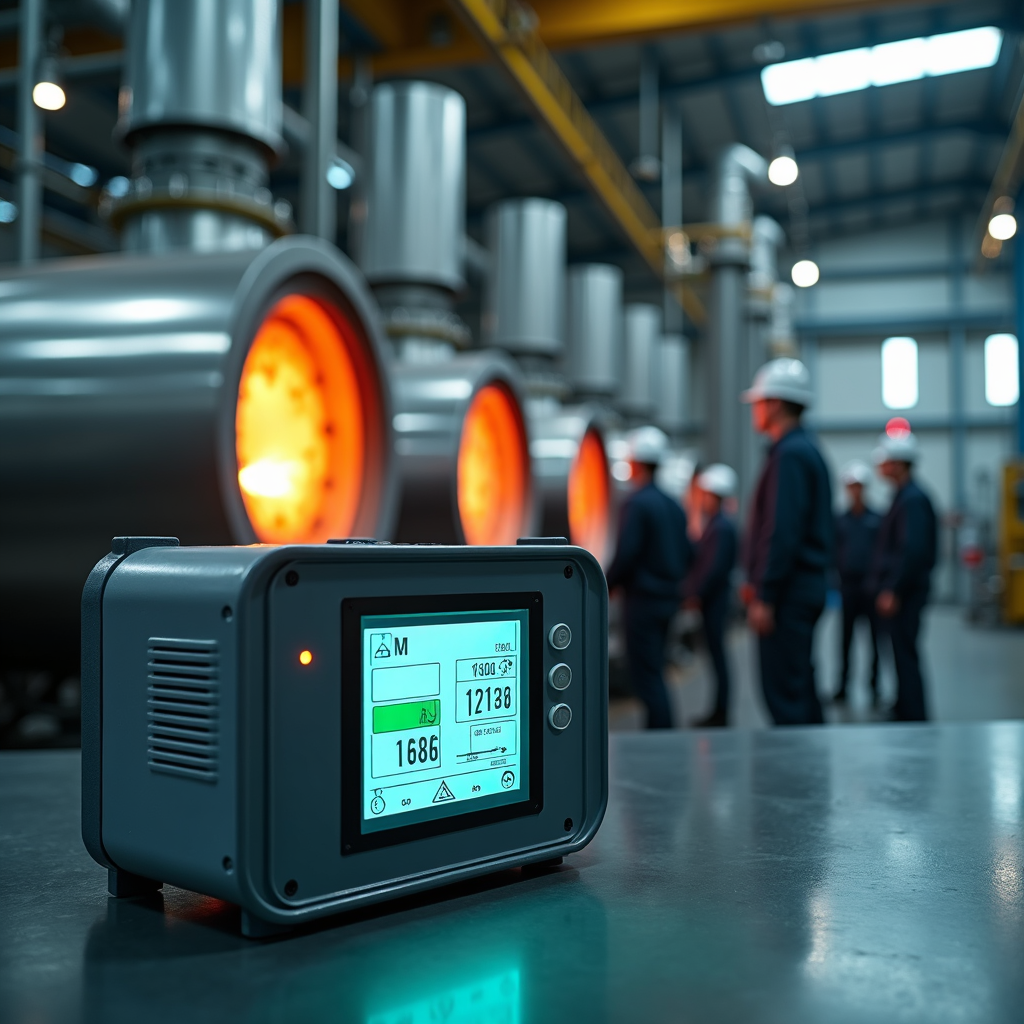
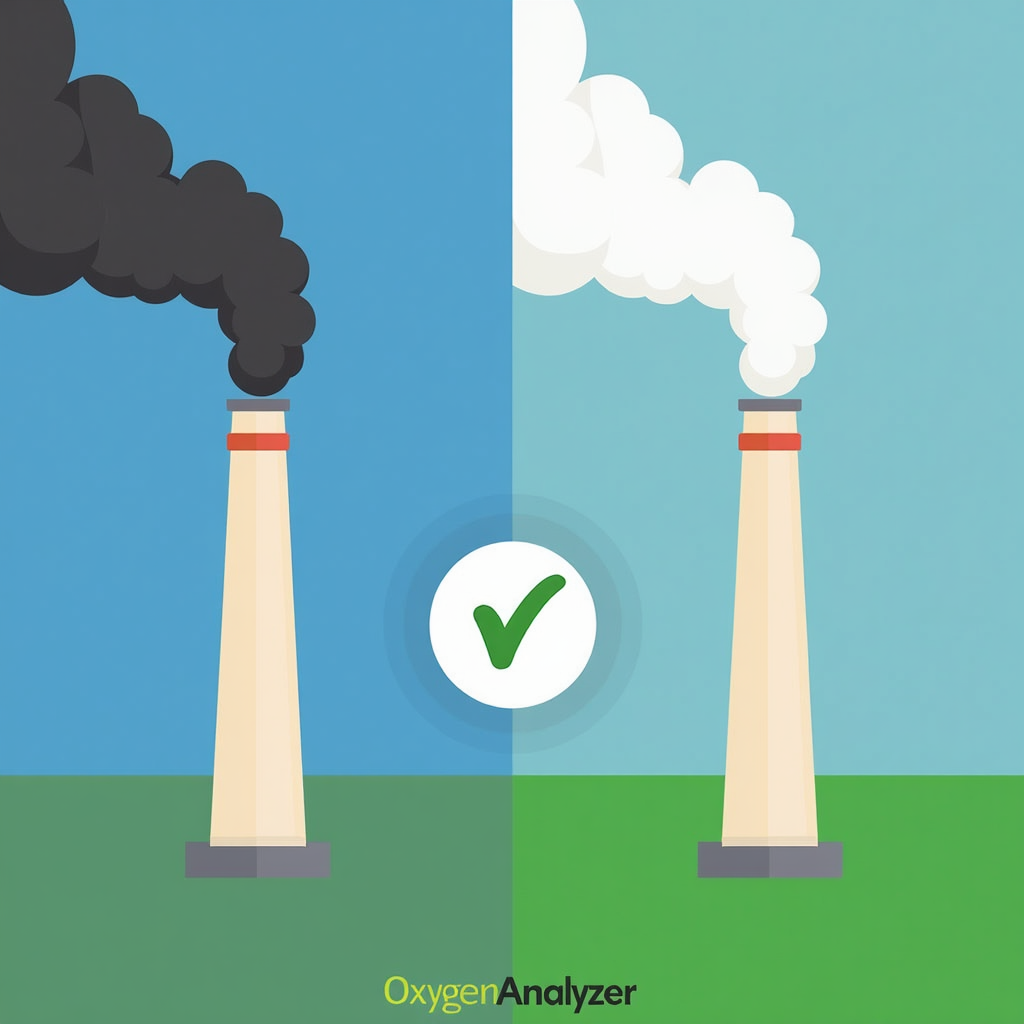
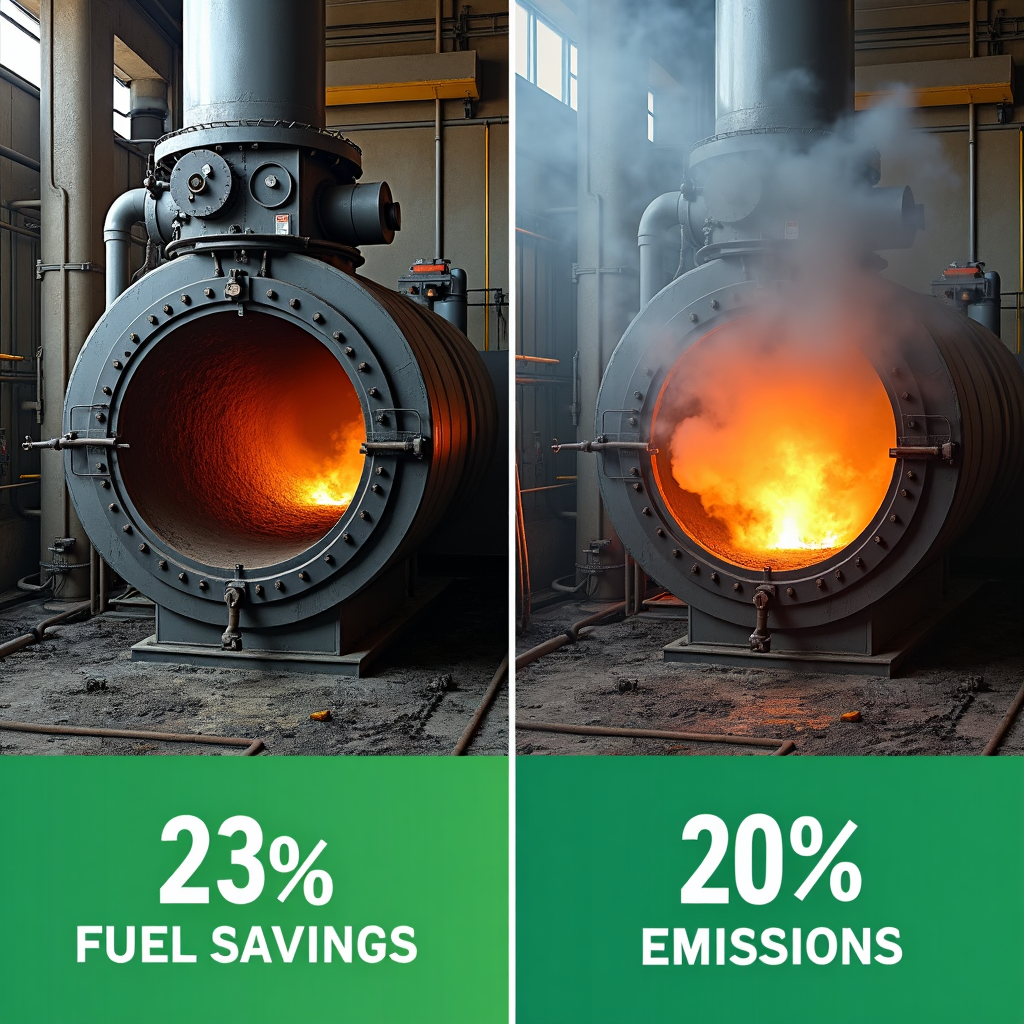
In today’s industrial landscape, energy efficiency and cost optimization are critical for maintaining competitiveness and sustainability. For industries relying on combustion processes—such as power plants, refineries, cement kilns, and boilers—precise control of oxygen levels is a game-changer. An Oxygen Analyzer is a powerful tool that helps industries achieve optimal combustion efficiency, reduce fuel consumption, and minimize emissions.

At Advance Engineers, we specialize in Field Instrumentation and Process Automation, empowering industries in Energy, Efficiency, and Automation. Our expertise helps clients across sectors cut costs, enhance productivity, and meet environmental regulations—all while maximizing operational efficiency.

In this blog, we’ll explore:

  • The role of oxygen analyzers in combustion processes
  • How they drive fuel savings and operational efficiency
  • Their impact on emissions reduction and compliance
  • Real-world benefits for industries

Let’s dive in!

Oxygen Analyser

Why Oxygen Levels Matter in Combustion

Combustion is a chemical reaction between fuel and oxygen, producing heat and byproducts like CO₂, water vapor, and, if inefficient, harmful pollutants like CO, NOx, and soot. The air-fuel ratio determines combustion efficiency:

  • Too much oxygen (excess air): Wastes energy by heating unnecessary air, increasing fuel consumption.
  • Too little oxygen (incomplete combustion): Leads to unburned fuel, soot formation, and higher emissions.

An Oxygen Analyzer provides real-time, accurate measurements of oxygen levels in flue gases, allowing precise control of the combustion process.

How Oxygen Analyzers Drive Cost Savings

1. Fuel Efficiency & Cost Reduction

  • Optimal air-fuel ratio: Oxygen analyzers help maintain the ideal stoichiometric ratio, ensuring complete combustion with minimal excess air.
  • Reduced fuel consumption: Even a 1% reduction in excess air can lead to 1-2% fuel savings—a significant cost reduction for large-scale operations.
  • ROI within months: Many industries recover the cost of oxygen analyzers within 6-12 months through fuel savings alone.

2. Lower Maintenance & Operational Costs

  • Prevents soot and corrosion: Incomplete combustion leads to soot buildup in boilers and heat exchangers, increasing maintenance costs. Oxygen analyzers help minimize these issues.
  • Extends equipment lifespan: By reducing thermal stress and corrosion, analyzers help prolong the life of burners, boilers, and furnaces.

3. Emissions Compliance & Sustainability

  • Reduces NOx, CO, and particulate emissions: Regulatory bodies worldwide impose strict emissions limits. Oxygen analyzers help industries stay compliant while avoiding fines.
  • Supports ESG goals: Companies committed to sustainability can reduce their carbon footprint by optimizing combustion efficiency.

Why Choose Advance Engineers?

At Advance Engineers, we don’t just supply instruments—we deliver tailored solutions for energy efficiency and process automation. Our expertise includes:

Cutting-edge oxygen analyzers from leading global brands ✅ Customized integration with your existing control systems ✅ Expert support for installation, calibration, and maintenance ✅ Proven track record in helping industries save millions in fuel costs

We work closely with clients in Energy, Efficiency, and Automation, ensuring that every solution aligns with their operational and sustainability goals.

emissions

If you’re looking to cut fuel costs, improve efficiency, and reduce emissions, an Oxygen Analyzer is a smart investment. At Advance Engineers, we’re here to help you maximize savings and operational excellence.

📞 WhatsApp us: +91 8427001018

📧 Email us: sales@aecl.in

🌐 Visit us: www.advance-engineers.com

Let’s discuss how we can transform your combustion processcontact us today! 🚀

Why to Automate the Boiler Drum Level Controls

Why to Automate the Boiler Drum Level Controls

Boiler drum level control is a critical aspect of efficient boiler operation. The boiler drum level refers to the measurement and regulation of water levels within the boiler drum, which is an integral part of the boiler system. Maintaining optimal drum level is crucial as it ensures the safe and efficient production of steam for various industrial processes.

Traditionally, the boiler drum level control was performed manually by operators, who would visually inspect and adjust the water level. However, this manual approach is prone to human error and can lead to inefficiencies and safety hazards. That’s where automation comes into play.

Automating the boiler drum level brings numerous benefits, including improved accuracy, reduced human error, enhanced safety, and optimized energy usage. By leveraging advanced technologies and control systems, automation ensures a precise and continuous monitoring of the water level in the drum.

One of the primary advantages of automating the boiler drum level is accuracy. Automation systems utilize sensors and control algorithms to precisely measure and control the water level. This leads to a highly accurate and responsive control of the boiler drum level, eliminating the guesswork and potential errors associated with manual operation.

Reducing human error is another crucial benefit of automation in boiler drum level control. As mentioned earlier, manual operation is prone to errors, such as misjudging water levels or delayed responses. These errors can lead to inefficiencies, increased fuel consumption, and even safety issues. With automation, the reliance on human judgment is significantly reduced, resulting in improved operational reliability and consistency.

Safety is of utmost importance in any industrial setting, and automation greatly enhances safety in boiler drum level control. Automated systems can quickly detect and respond to abnormal water level conditions, such as low or high levels, and trigger appropriate alarms and corrective actions. By minimizing the potential for human error, automation helps mitigate risks, reducing the likelihood of accidents and equipment damage.

Optimizing energy usage is an additional advantage of automated boiler drum level control. Maintaining the correct water level in the boiler drum is essential for efficient heat transfer and steam generation. Automation systems continuously monitor and adjust the water level, ensuring optimal steam production while minimizing energy wastage. By precisely balancing the water level, these systems help to minimize fuel consumption and associated costs.

Real-life examples from industries that have successfully implemented automation in their boiler systems highlight the benefits of automated drum level control. For instance, a power plant installed an automated boiler drum level control system that resulted in a significant reduction in fuel consumption. By accurately maintaining the desired water level, the plant achieved substantial energy savings, leading to lower operational costs and improved environmental performance.

In terms of long-term cost savings, automated boiler drum level control offers substantial benefits. The enhanced accuracy and efficiency provided by these systems translate into reduced fuel consumption, resulting in long-term cost savings for industries. Additionally, the improved safety and reliability of automated control systems help prevent equipment damage and downtime, further minimizing maintenance and repair costs.

From an environmental perspective, automated drum level control contributes to sustainability efforts by optimizing energy usage. By reducing fuel consumption, automation helps minimize greenhouse gas emissions associated with boiler operations. This proactive approach aligns with global efforts to mitigate climate change and reduce the carbon footprint of industrial processes.

In conclusion, automating the boiler drum level control brings a multitude of benefits to industrial operations. From improved accuracy and reduced human error to enhanced safety and optimized energy usage, automation is a game-changer in efficient boiler operation. Real-life examples and industry practices stand as a testament to the significant energy savings and cost efficiencies that can be achieved through the adoption of automated drum level control systems. Encouraging businesses to consider this technology not only improves their operations but also contributes to a more sustainable and environmentally conscious industry.

CLAMP ON FLOW METER A CUTTING TECHNOLOGY OF FUTURE – Food & Beverages

CLAMP ON FLOW METER A CUTTING TECHNOLOGY OF FUTURE – Food & Beverages

CLAMP ON FLOW METER A CUTTING TECHNOLOGY OF FUTURE – Food & Beverages

In today’s highly interconnected world, global competition has intensified across various industries. This is especially true for the food and beverage sector, where the challenges of managing resources are compounded by the ever-increasing costs associated with water consumption and the disposal of wastewater. Given that the food and beverage industry is inherently water-intensive, it becomes essential for companies to engage in continuous monitoring and management of water usage. This not only helps in reducing operational costs but also aligns with growing environmental regulations and consumer expectations regarding sustainability.Flow measurement emerges as a critical component in the manufacturing processes of food and beverages. This measurement is crucial at various stages, from the initial filling of vessels to the precise measurement of ingredients, and even in the control of cleaning processes. In this context, maintaining both quality and hygiene is of utmost importance. The food and beverage industry must adhere to stringent standards that ensure the safety and quality of products, which are paramount for consumer trust and brand integrity. Therefore, effective flow measurement systems are indispensable for ensuring that these standards are met consistently throughout the production cycle.One of the widely recognized practices in this industry is the clean-in-place (CIP) procedure, which is designed to maintain hygiene without disassembling the equipment. These procedures typically utilize demineralized water combined with specialized chemicals that are often costly. These chemicals are essential for effectively removing scale, bacteria, and other debris that can accumulate in process vessels and piping systems. The efficiency of the CIP process significantly impacts overall production efficiency and product safety, making it a crucial focus area for manufacturers.Moreover, the process of changing over from one product to another within the same production line is often governed by strict time-based protocols. This changeover is not merely a logistical necessity but a critical step in ensuring that the new product flows seamlessly while all remnants of the previous product are thoroughly flushed out. This step is vital to prevent cross-contamination and to uphold the quality standards that consumers expect. The effectiveness of this changeover process relies heavily on the accurate and timely measurement of flow rates, ensuring that the transition between products is smooth and efficient.To achieve this, it is imperative to deploy the most appropriate flow meter technology that not only measures flow rates accurately but also incorporates additional factors such as density and acoustic transmission. These capabilities are essential for determining the precise moment when a new product is introduced into the same line, ensuring that the transition is managed effectively. In this context, clamp-on flow meters are particularly well-suited. They offer the advantage of non-intrusive measurement, allowing for easy installation and maintenance while providing reliable data that is crucial for optimizing production processes. Their ability to function effectively in dynamic environments makes them an invaluable tool in the food and beverage industry, where efficiency, accuracy, and hygiene are of paramount concern.

Advance Engineers, a pioneering process automation company, specializes in delivering innovative solutions in the fields of Instrumentation, Automation, and Fire Safety. With a commitment to excellence and a focus on cutting-edge technology, we empower industries to streamline operations, enhance safety, and achieve optimal efficiency. Our expert team is dedicated to providing tailored solutions that meet the unique needs of each client, ensuring seamless integration and reliable performance. To learn more about how we can elevate your operations, reach out to us today via WhatsApp or Email