+919216659657 sales@aecl.in

The Digital Fortress: A Pharma Engineer’s Comprehensive Guide to Mastering 21 CFR Part 11 Compliance in Automation
The Audit Anxiety in the “Pharmacy of the World”

If you drive through the industrial corridors of Baddi, Nalagarh, or Paonta Sahib—the beating heart of India’s pharmaceutical manufacturing—you will see world-class facilities churning out generics for the global market. Yet, inside the conference rooms of these massive plants, one acronym generates more anxiety than any production target or supply chain delay: USFDA.

For Indian pharmaceutical exporters, the United States Food and Drug Administration (USFDA) audits are the ultimate litmus test. In recent years, the focus of these audits has shifted aggressively from physical hygiene to Data Integrity.

Gone are the days when a wet signature on a paper batch record was enough. Today, your PLC (Programmable Logic Controller) and SCADA (Supervisory Control and Data Acquisition) systems are the primary witnesses to your process quality. If an auditor asks, “Who changed this sterilization setpoint at 3:00 AM?” and your HMI cannot provide a definitive, tamper-proof answer, you are staring down the barrel of a Form 483 observation or, worse, a Warning Letter.

This is where 21 CFR Part 11 comes in.

To the uninitiated, it reads like dry legal text. To the experienced Automation Engineer, it is the blueprint for building a credible, export-ready facility.

At Advance Engineers, we have spent years working with pharma majors in the Chandigarh and Himachal region, helping them bridge the gap between engineering reality and regulatory requirements. We know that compliance isn’t just about buying “Part 11 compliant software”; it’s about how that software is engineered, configured, and validated.

This comprehensive guide is designed for the Plant Head, the QA Manager, and the Automation Engineer. We will strip away the legalese and explore the practical, nuts-and-bolts implementation of 21 CFR Part 11 in your industrial automation systems.


Part 1: De-mystifying the Regulation

Title 21 CFR Part 11 is the FDA’s regulation regarding Electronic Records and Electronic Signatures (ERES).

In simple terms, it states that electronic records (data stored in your SCADA/Historian) and electronic signatures (approvals done via login) are considered just as legally binding and valid as paper records and handwritten signatures—provided specific conditions are met.

The regulation is divided into two main subparts relevant to us:

  1. Subpart B – Electronic Records: How you create, maintain, and archive data securely.

  2. Subpart C – Electronic Signatures: How you ensure that a specific action is irrefutably linked to a specific human being.

Why is this hard? Because standard industrial automation was originally designed for efficiency, not security. A standard HMI lets anyone walk up, press “Start,” and walk away. A standard CSV file export lets anyone open it in Excel, change a value from 80°C to 121°C, save it, and no one would ever know. Part 11 forces us to lock these doors.


Part 2: The Core Pillar—Data Integrity and ALCOA+

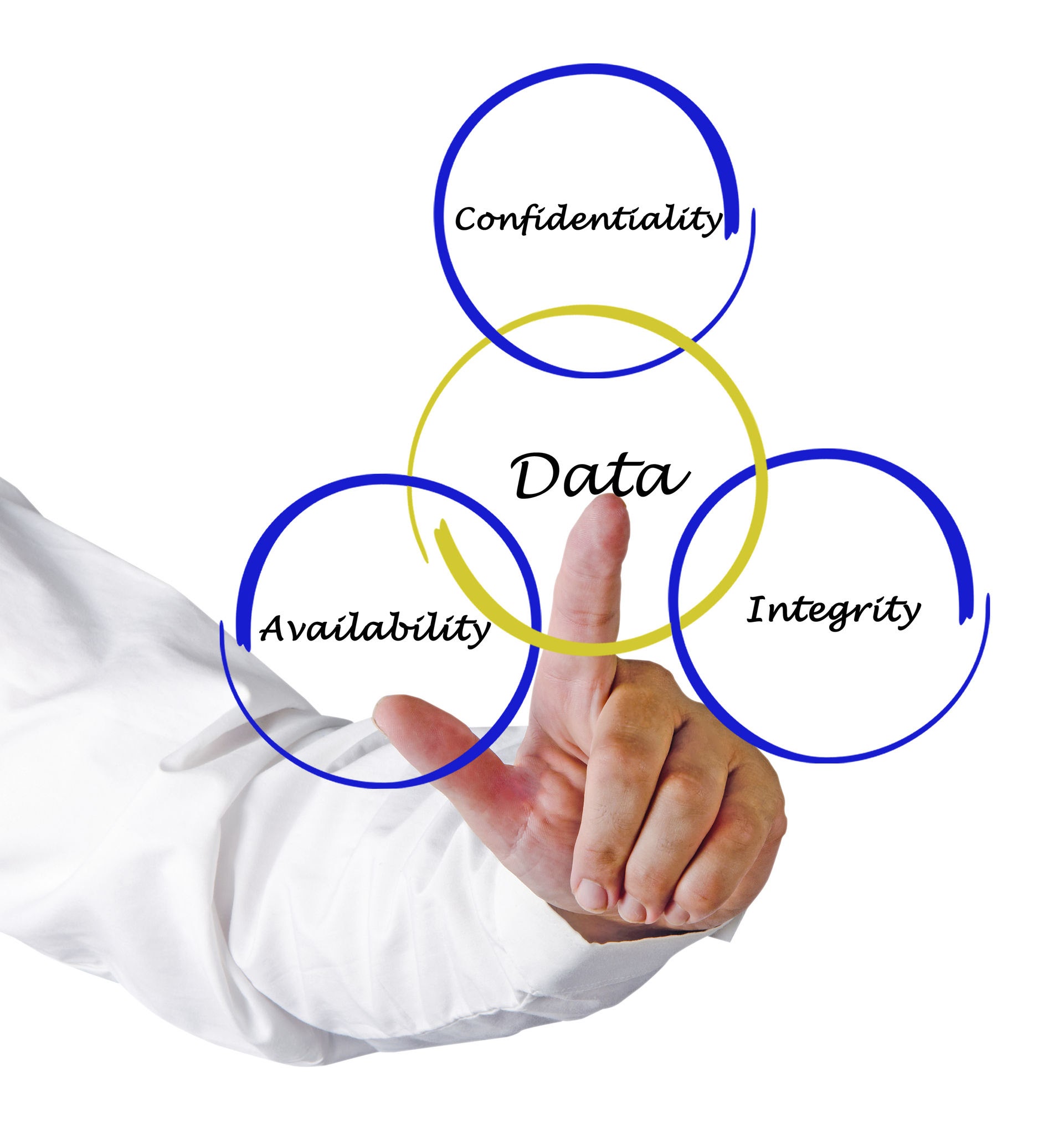
Before diving into the PLC logic, we must understand the philosophy behind the rule: ALCOA+. This is the framework auditors use to judge your system. If your automation solution doesn’t satisfy these principles, it is not compliant.
  • A – Attributable: Every piece of data must be traced back to the person or system that created it. (No generic “Operator” logins).

  • L – Legible: The data must be readable and permanent throughout its lifecycle.

  • C – Contemporaneous: Data must be recorded at the time the event occurred. (No back-dating logs).

  • O – Original: The first capture of data is the source of truth.

  • A – Accurate: The data must be error-free and unaltered.

  • + (Plus): Complete, Consistent, Enduring, and Available.

At Advance Engineers, when we design a SCADA architecture for a Sterile Injectable line or an OSD (Oral Solid Dosage) plant, we essentially build a “Digital Chain of Custody” that satisfies ALCOA+ at every step.


Part 3: Engineering Compliance – The Technical Implementation

This section details how we translate these regulations into actual engineering features within platforms like Siemens WinCC, Rockwell FactoryTalk View SE, or Wonderware System Platform.

1. STRICT Access Control & User Management

The days of a shared HMI password written on a sticky note are over.

  • Individual Accounts: Every operator, supervisor, and maintenance engineer must have a unique User ID.

  • Role-Based Access Control (RBAC): We configure security groups.

    • Operators can View process, Acknowledge alarms, and Start batches.

    • Supervisors can Change Setpoints and Modify Recipes.

    • Maintenance can Access PID tuning parameters.

    • Administrators can Manage users (but NOT run the process—segregation of duties).

  • Password Aging & Complexity: The SCADA system must force password changes every 30-90 days. It must reject simple passwords and lock the account after 3 failed attempts.

  • Auto-Logout: The system must automatically log out an inactive user after a set time (e.g., 10 minutes) to prevent unauthorized access if an operator walks away.

2. The “Black Box”: Audit Trails

This is the single most critical feature for an auditor. An Audit Trail is a secure, immutable chronological record of who did what, when, and why.

A compliant Audit Trail in a SCADA system must capture:

  • Timestamp: Date and Time (synced to a secure NTP server).

  • User ID: Who made the change?

  • Action: What happened? (e.g., “Setpoint Change”).

  • Variable Name: Which tag was affected? (e.g., Autoclave_Temp_SP).

  • Old Value: What was it before? (e.g., “121.0”).

  • New Value: What is it now? (e.g., “121.5”).

  • Reason for Change: This is crucial. The system must force the user to select a reason from a pre-defined list (e.g., “Process Deviation,” “Calibration,” “Batch Change”) or type a manual comment before the value is accepted.

The Advance Engineers Standard: We configure Audit Trails to be “Read-Only” for everyone. Even the Administrator should not be able to delete or edit the audit logs. They are stored in encrypted SQL databases or tamper-evident proprietary file formats.

3. Electronic Signatures (The “Double Handshake”)

For critical actions—like starting a batch, approving a recipe, or acknowledging a critical alarm—a simple click is not enough. The system must demand an Electronic Signature.

This typically involves a pop-up window requiring two distinct identification components:

  1. The User ID (Public).

  2. The Password (Private).

This action essentially says, “I, John Doe, certify that I am authorizing this action at this time.” In our systems, this signature is permanently linked to the record of that batch.

4. Recipe Management and Version Control

Inconsistent batches are a quality nightmare. In a Part 11 compliant system, “Recipes” (the set of parameters defining a product) are locked down tight.

  • Version Control: If a recipe is modified, the system creates a new version (e.g., Version 1.0 -> 1.1).

  • Approval Workflow: A recipe created by a Junior Engineer cannot be used in production until it is electronically signed and “Approved” by a QA Manager.

  • Verification: When a batch starts, the PLC verifies that the loaded recipe matches the checksum of the approved recipe in the database, ensuring no parameters were tweaked in the background.


Part 4: The Danger of “Open Systems” and Data Storage

A common pitfall we see in older plants is the reliance on “Flat Files” like CSV or TXT files for data logging.

The Scenario: A SCADA system logs temperature data to a CSV file on the C: drive. At the end of the shift, the supervisor copies it to a USB stick.

The Compliance Violation: A user could open that CSV file, change a few temperature readings that were out of spec, save the file, and then present it to QA. There is no trace of the alteration. This is a critical data integrity failure.

The Solution: We implement Database-Centric Architectures.

  • SQL Server with Security: Data is logged directly into an SQL database. The database is password protected, and permissions are set so that only the SCADA Service Account can Write data. Human users have Read-Only access.

  • Encrypted Historians: We use specialized Historian software (like OSIsoft PI, FactoryTalk Historian, or Wonderware Historian) that compresses and encrypts data. It is mathematically impossible to modify a historical value without breaking the file’s integrity signature.


Part 5: Computer System Validation (CSV) and GAMP 5

Buying compliant software is only 50% of the battle. The other 50% is proving that it works. This is called Computer System Validation (CSV).

The pharmaceutical industry follows the GAMP 5 (Good Automated Manufacturing Practice) guide using the V-Model.
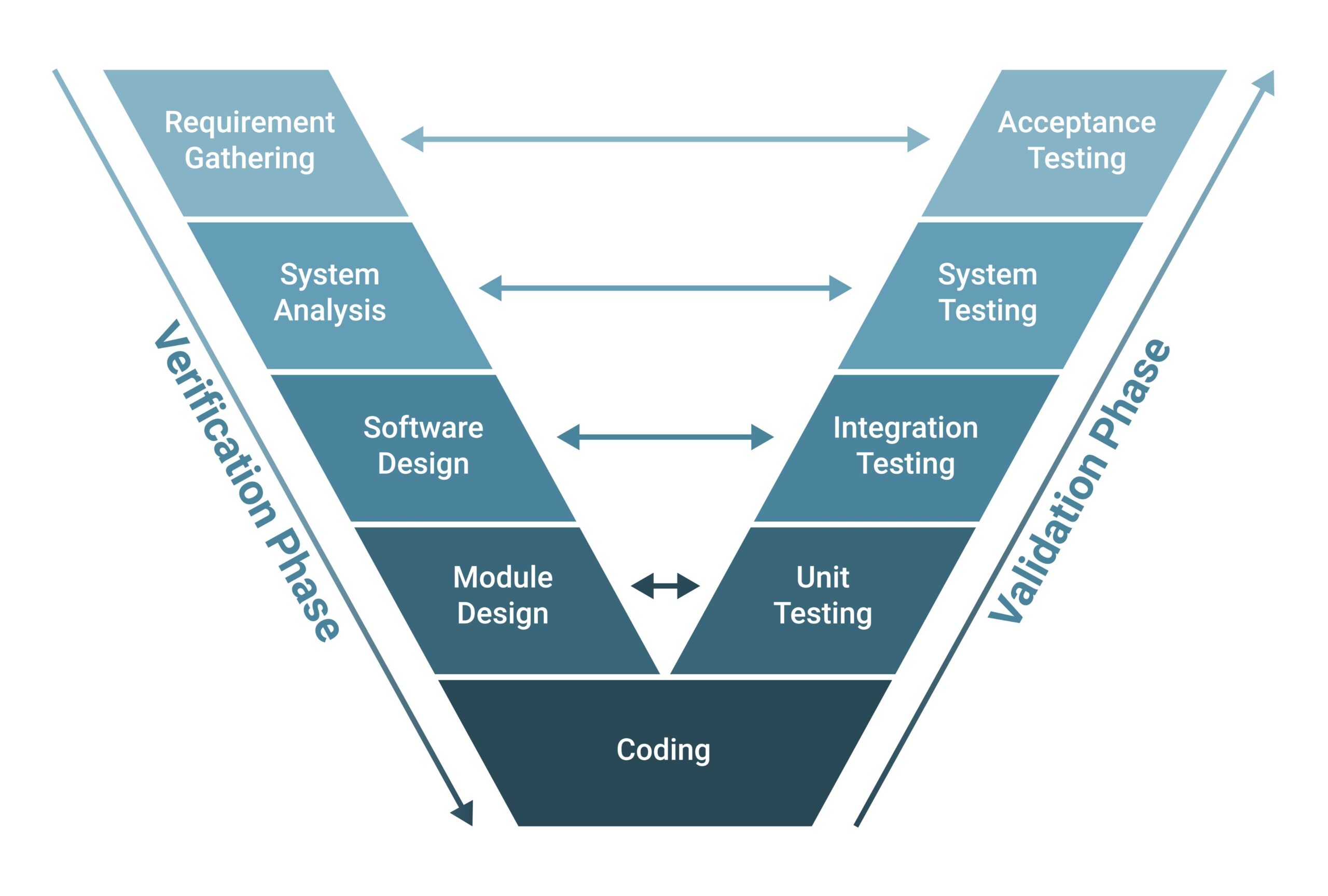
At Advance Engineers, we don’t just hand over the code; we provide the full documentation stack required for your validation master plan:

  1. URS (User Requirement Specification): Helping you define exactly what the system must do.

  2. FS/DS (Functional & Design Specifications): Documenting how our code meets your URS.

  3. IQ (Installation Qualification): Verifying the hardware is installed correctly and the software is the correct version.

  4. OQ (Operational Qualification): Testing every alarm, interlock, and security feature. (e.g., We deliberately try to log in with a wrong password to prove the system locks us out).

  5. PQ (Performance Qualification): Verifying the system works under real production load.

  6. Traceability Matrix: A document linking every Requirement -> Design Element -> Test Case.

Without this paperwork, your sophisticated SCADA system is just a “black box” to an auditor.


Part 6: Retrofitting Legacy Systems for Compliance

Many plants in India are running older machines that work perfectly mechanically but lack digital compliance.

Do you need to throw away the machine? No.

We specialize in “Compliance Retrofits.” We can install a “SCADA Overlay” or a “Data Integrity Gateway.”

  • We leave the existing PLC logic for machine control largely untouched (to minimize re-validation of the process).

  • We add a new, modern HMI/SCADA layer on top that handles User Management, Audit Trails, and Reporting.

  • We disable the local operator controls on the old panel and route all critical inputs through the compliant HMI.

This approach saves you the cost of a new machine while bringing you up to 21 CFR Part 11 standards.


Part 7: The Advance Engineers Advantage

Why trust Advance Engineers with your compliance?

  1. Local Presence, Global Standards: Based in Chandigarh, we are minutes away from the major pharma hubs of Punjab and Himachal. We understand the local operational challenges but engineer to US/EU standards.

  2. Multi-Platform Expertise: Whether your plant runs on Siemens, Rockwell, Mitsubishi, or Schneider, we have the in-house drivers and expertise to unify them into a compliant reporting structure.

  3. IT/OT Convergence: We don’t just know PLCs; we know Databases, Networking, and Server Security. We bridge the gap between your shop floor and your IT department.


Conclusion: Compliance is a Culture, Not Just Code

21 CFR Part 11 is often viewed as a burden. However, when implemented correctly, it is a tool for excellence.

A compliant system doesn’t just satisfy an auditor; it gives you confidence.

  • Confidence that your batch records are accurate.

  • Confidence that your recipes are followed exactly.

  • Confidence that if a failure occurs, you can trace the root cause instantly.

In the high-stakes world of pharmaceuticals, “Data Integrity” is synonymous with “Product Safety.” There is no room for ambiguity.

Don’t let your next audit be a source of fear. Turn your automation data into your strongest asset.


Call to Action

Is Your Facility Audit-Ready?

Don’t wait for a Form 483 to reveal gaps in your data integrity.

At Advance Engineers, we offer a comprehensive Data Integrity Audit. Our experts will review your existing automation systems, identify compliance risks, and propose a practical roadmap to full 21 CFR Part 11 compliance.

Let’s build a system that auditors trust.
Schedule a Compliance Consultation with Our Experts

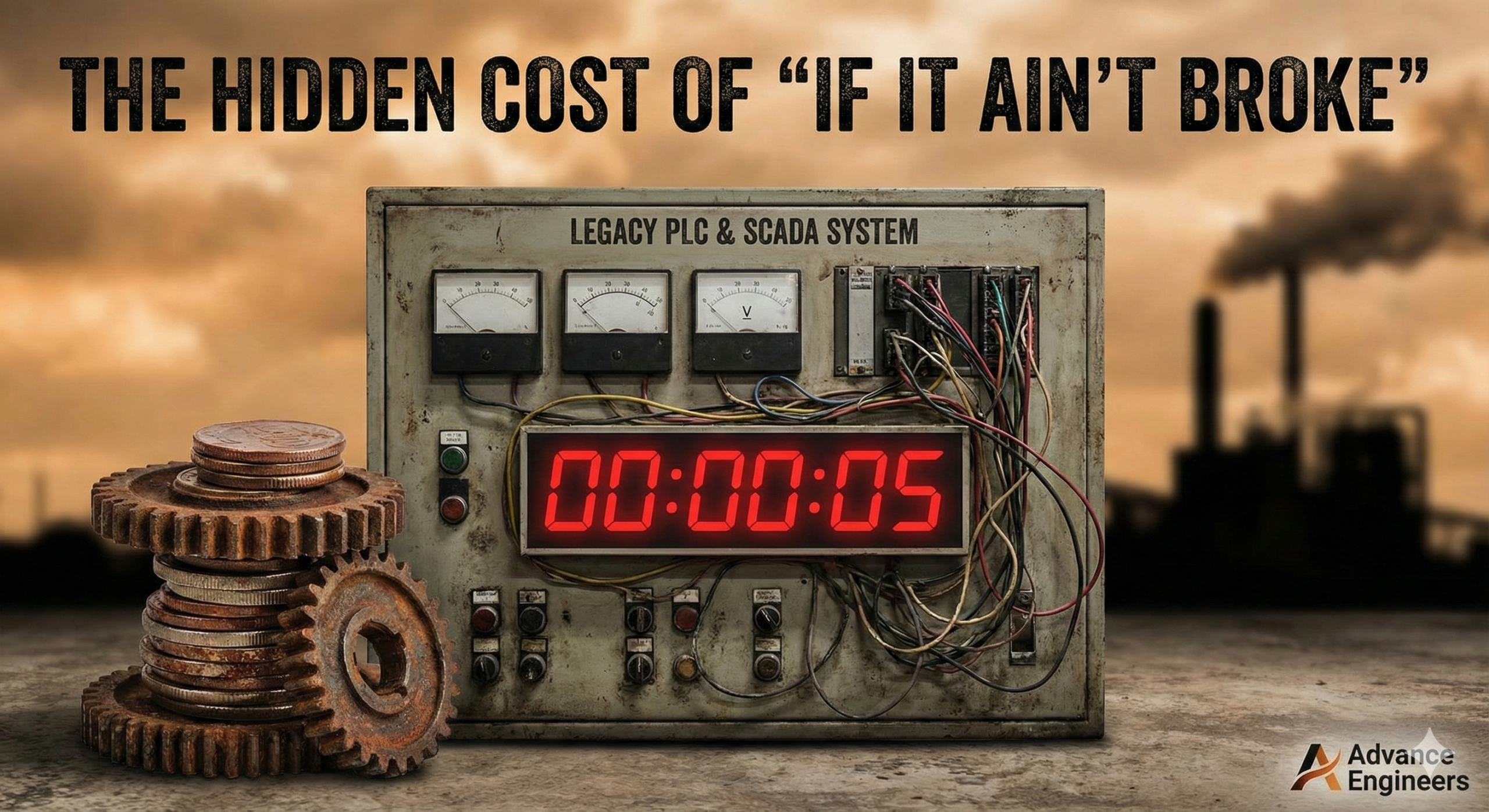
The Hidden Cost of “If It Ain’t Broke”: Why Clinging to Legacy PLC & SCADA Systems is a Ticking Time Bomb for Your Plant

The Hidden Cost of “If It Ain’t Broke”: Why Clinging to Legacy PLC & SCADA Systems is a Ticking Time Bomb for Your Plant

Introduction: The Silent Threat on Your Factory Floor

Walk into many established manufacturing plants across India—from the textile mills of Ludhiana to the pharmaceutical hubs of Baddi and the automotive ancillary units around Chandigarh—and you’ll find a common, silent hero. In a corner of a control room, inside a dusty panel, a Programmable Logic Controller (PLC) has been faithfully executing its logic for 15, 20, perhaps even 25 years. Its corresponding Supervisory Control and Data Acquisition (SCADA) system runs on a PC with an operating system that Microsoft stopped supporting a decade ago.

The prevailing philosophy is simple and, on the surface, prudent: “If it ain’t broke, don’t fix it.”

This mindset views automation upgrades as an unnecessary expense, a disruption to production that offers little tangible return. Why replace a Siemens S7-300 or an Allen-Bradley SLC 500 that’s still blinking its green “RUN” light?

At Advance Engineers, we understand this perspective. We’ve spent over a decade working side-by-side with plant managers and maintenance teams. We know the pressure to keep costs down and production up. But we also know the uncomfortable truth that lies beneath the surface of a legacy system.

The “if it ain’t broke” philosophy is a dangerous illusion. Your legacy system is breaking; it’s just doing so in ways that aren’t immediately obvious—until the day it fails catastrophically. The true cost of keeping a legacy system isn’t zero; it’s a mounting debt of risk that you will eventually have to pay, often at the worst possible moment.

This blog post is a deep dive into the hidden costs of legacy automation. We will move beyond the fear-mongering and provide a clear, technically sound, and business-focused argument for why planning a migration strategy now is the most responsible decision you can make for your plant’s future. We’ll explore the technical pitfalls, build the business case for modernization, and outline a practical, phased approach to upgrading your control systems without bringing your plant to a standstill.


Part 1: The Three Pillars of Legacy Risk

A legacy system is generally defined as one that is no longer available for purchase, is no longer supported by the manufacturer, or cannot run on modern operating systems. The risk it poses can be broken down into three main categories.

1. The Hardware Obsolescence Trap: Searching for Unicorns

The most immediate and tangible threat is hardware failure. Electronic components have a finite lifespan. Capacitors dry out, solder joints degrade, and power supplies fail. When a 20-year-old PLC CPU or a specialized I/O card dies, you cannot simply order a new one from the manufacturer.

You are forced into the grey market. You’re scouring eBay, calling obscure surplus vendors, or hoping a contact in another plant has a spare gathering dust on a shelf. The cost of these “refurbished” parts is often astronomically higher than their original list price—sometimes 500% to 1,000% more.

And what are you buying? A component of unknown history. Was it pulled from a working machine, or was it subjected to voltage spikes? You have no way of knowing. You are paying a premium for an unreliable part to fix a critical failure, all while your production line stands still.

Consider the cost of downtime in your facility. Is it ₹50,000 per hour? ₹2 Lakhs? More? A multi-day outage while you hunt for a rare processor card can easily wipe out an entire year’s maintenance budget.

2. The “Brain Drain” and Support Void

The human element is just as critical as the hardware. The engineers and technicians who originally installed and programmed your legacy systems are retiring. They carry with them decades of tribal knowledge—the intuitive understanding of the system’s quirks, the undocumented workarounds, the “ghosts in the machine.”

The new generation of controls engineers is trained on modern platforms like TIA Portal, Studio 5000, and web-based SCADA systems. Asking a young engineer to troubleshoot a PLC-5 program using DOS-based software is like asking a modern app developer to write code on punch cards. It’s inefficient, frustrating, and prone to error.

Furthermore, vendor support for these systems is non-existent. If you encounter a complex software bug or a communication issue, there is no hotline to call. You are on your own.

3. The Cybersecurity Sieve

In the era of Industry 4.0, connectivity is king. But connecting a Windows XP-based SCADA machine to your plant network is like leaving your front door wide open in a high-crime neighborhood.

Legacy operating systems have countless unpatched security vulnerabilities. They are easy targets for malware, ransomware, and malicious actors. A single infected USB drive plugged into an old HMI can compromise your entire network, leading to data theft, loss of process control, or a complete encryption of your servers with a ransom demand.

Modern systems are built with “security by design,” featuring user authentication, encrypted communications, and role-based access control. Legacy systems were built for a world where “air-gapping” was the only security measure—a measure that is practically impossible to maintain in today’s connected manufacturing environment.


Part 2: The Business Case for Modernization (Beyond Avoiding Disaster)

The argument for upgrading isn’t just about avoiding a negative; it’s about gaining positives. A modern control system is a platform for growth and efficiency.

1. Unlocking Process Visibility with Modern SCADA

Old SCADA systems were essentially digital mimic panels. They showed you if a pump was on or off, a tank level, and maybe a simple trend graph.

Modern SCADA platforms, like those we deploy at Advance Engineers, are powerful data hubs. They offer:

  • High-Performance HMI Graphics: Designed for immediate situational awareness, helping operators spot abnormal conditions before they become alarms.

  • Historian & Analytics: Instead of just logging data, modern systems can analyze it. You can correlate batch quality with process parameters, identify micro-stoppages, and calculate Overall Equipment Effectiveness (OEE) in real-time.

  • Web & Mobile Access: Plant managers can monitor critical KPIs from their smartphones, tablet, or laptop, anywhere in the world, via secure web clients.

2. Enhanced Diagnostics and Reduced Mean Time To Repair (MTTR)

When a legacy machine stops, the troubleshooting process is often manual and tedious. A technician has to grab a multimeter, open panels, trace wires, and hook up a laptop to look at ladder logic.

Modern PLCs and devices offer rich diagnostic data directly on the HMI. A drive fault isn’t just a generic red light; the HMI tells you exactly what happened: “VFD-101 Overcurrent Fault.” The PLC code can be structured with built-in alarm handling that points the operator directly to the root cause, slashing downtime from hours to minutes.

3. Future-Proofing and Scalability

Your plant is not static. You add new product lines, expand capacity, and integrate new technologies. A legacy control system is a bottleneck to this growth. Adding a new station to an old PLC-5 network or integrating a modern robot with an old S7-300 can be a nightmare of compatibility issues and custom communication drivers.

Modern controllers like the Siemens S7-1500 or Allen-Bradley ControlLogix are designed for scalability. They support open standard protocols like OPC UA, Modbus TCP, and EtherNet/IP, making integration with new machinery, MES (Manufacturing Execution Systems), and ERP systems seamless. You are building a foundation that will support your plant for the next 20 years.


Part 3: The Advance Engineers Approach to Low-Risk Migration

The biggest fear holding back migration projects is the risk of the upgrade itself. “What if the new system doesn’t work? What if we’re down for weeks during the changeover?”

At Advance Engineers, we specialize in risk-mitigated migration. We don’t just “rip and replace.” We follow a structured, phased approach designed to ensure zero unplanned downtime.

Phase 1: The Comprehensive Audit and Front-End Engineering Design (FEED)

We start by understanding what you have. This isn’t just a list of part numbers. We perform a deep dive:

  1. Hardware Audit: Documenting every PLC, I/O card, drive, HMI, and communication module. We assess their lifecycle status and availability of spares.

  2. Software Audit: We upload the current running program from the PLC. Crucially, we don’t just rely on the last saved copy on your server, which is often outdated. We analyze the code structure, identify complex algorithms, communication blocks, and undocumented forcing.

  3. Functional Specification: We work with your operators and process engineers to document how the machine actually works, not just how it was designed to work 20 years ago. This is where we capture the tribal knowledge.

  4. Risk Assessment: We identify critical process steps, safety interlocks, and potential failure points during migration.

This phase culminates in a detailed FEED report, outlining the new hardware architecture, the migration strategy, a project timeline, and a fixed cost.

Phase 2: Offline Engineering and Simulation

This is where 80% of the work happens, and it all takes place away from your production line.

  1. Code Conversion & Re-engineering: We use automated tools to convert the base logic (e.g., from S5 to S7), but a human engineer reviews and re-writes critical sections. We don’t just convert “spaghetti code”; we structure it according to modern standards like ISA-88 for batch control, making it readable and maintainable.

  2. SCADA Development: We build the new SCADA screens, incorporating modern high-performance HMI principles while ensuring familiarity for your operators so the learning curve is gentle.

  3. The “Digital Twin” Simulation: Before we touch your live system, we test the new PLC code and SCADA against a simulation of your process. We verify interlocks, alarm handling, sequences, and communication paths in a safe, virtual environment. This step is critical for catching 95% of bugs before commissioning.

Phase 3: Phased Implementation and Commissioning

We rarely recommend a “big bang” cutover over a single weekend. Instead, we prefer a phased approach that minimizes risk.

  • Parallel Operation Strategy: For critical processes, we can install the new PLC alongside the old one. We use gateway devices to map the old I/O to the new processor. The new PLC runs in “shadow mode,” reading inputs and executing logic, but its outputs are disabled. We compare its behavior to the legacy system in real-time to validate performance.

  • Station-by-Station Migration: In a multi-station assembly line, we can migrate one station at a time, during scheduled maintenance windows, proving each section before moving to the next.

  • The Final Cutover: When confidence is high, we perform the final switch. Because of the extensive simulation, this is often as simple as moving I/O connectors to new terminal blocks and enabling the outputs on the new PLC.

Phase 4: Training and Support

A new system is useless if your team can’t use it. We provide:

  • Operator Training: Hands-on training on the new HMI/SCADA, focusing on how to run the process, handle alarms, and perform basic troubleshooting.

  • Maintenance Training: Deep-dive training for your controls team on the new PLC hardware, software (e.g., TIA Portal), how to go online, monitor logic, and force I/O safely.

  • Post-Commissioning Support: We don’t just disappear. We provide on-site support during initial production runs and remote support thereafter to address any teething issues.


Specific Migration Scenarios We Handle

  • Siemens S5 to S7-1500: A very common and critical upgrade. We handle the complex conversion of S5’s statement list (STL) and absolute addressing to the structured, symbolic tagging of the S7-1500 world, along with replacing PROFIBUS DP with PROFINET.

  • Allen-Bradley PLC-5/SLC 500 to ControlLogix/CompactLogix: We utilize Rockwell’s migration tools and our own expertise to convert ladder logic and leverage the power of the Logix platform’s tag-based architecture. We can often reuse existing 1771 or 1746 I/O racks in the first phase to reduce initial wiring costs.

  • Legacy SCADA (e.g., older WinCC, Wonderware, RSView32) to Modern Platforms: We migrate your graphics, alarm databases, and historical data to modern, web-enabled platforms like Ignition, WinCC Unified, or FactoryTalk View SE.


Conclusion: The Choice is Yours—Plan or Panic?

The question is not if you will have to replace your legacy automation systems, but when and how.

You can wait for a catastrophic failure to force your hand. This path guarantees maximum downtime, premium pricing for emergency parts and labor, and immense stress on your entire organization. It’s management by panic.

Or, you can choose the path of planned modernization. This path puts you in control. It allows you to budget for the project, schedule it during planned shutdowns, and execute it with a defined scope and minimized risk. It turns a potential disaster into a strategic initiative that improves your plant’s reliability, efficiency, and competitiveness.

At Advance Engineers, we are more than just system integrators; we are your partners in this critical transition. We have the deep technical expertise in both legacy and modern platforms, combined with a project management methodology designed for the realities of a 24/7 manufacturing environment.

Don’t let an obsolete controller dictate your plant’s future. Take control today.

Are you sitting on a legacy automation time bomb? Let’s defuse it together.

Contact Advance Engineers today for a no-obligation consultation. We can perform an initial audit of your installed base, help you assess your risk, and outline a preliminary roadmap for a phased, low-risk migration.

Schedule a Meeting with Our Automation Migration Experts and secure your plant’s future. https://go.aecl.in/MSBMEETING

From Sensors to the Cloud: The Ultimate Guide to Selecting an Industrial IoT (IIoT) System

From Sensors to the Cloud: The Ultimate Guide to Selecting an Industrial IoT (IIoT) System

Introduction: Navigating the “Internet of Things” Jungle

“IoT” is perhaps the most overused buzzword in manufacturing today. For a plant manager in Ludhiana or a process engineer in Baddi, the term often conjures vague images of iPads controlling conveyor belts. But in reality, Industrial IoT (IIoT) is about one specific goal: Data Granularity.

The difference between a standard automation system and an IIoT system is simple.

  • Standard System: Tells you the motor is running.

  • IIoT System: Tells you the motor is running at 45°C, vibrating at 3mm/s, and consuming 12.5 Amps.

However, the market is flooded with gadgets ranging from ₹500 Wi-Fi chips to ₹5,00,000 Edge Controllers. How do you select the right architecture?

At Advance Engineers, we believe the selection process shouldn’t start with the “Cloud”; it must start at the “Sensor.” This guide breaks down the selection hierarchy from basic connectivity to high-end enterprise integration.

Level 1: The Foundation – Field Connectivity (Basic to Smart)

Before you can analyze data, you must capture it. The selection of your field devices determines the quality of your data.

The Old Way: Analog (4-20mA) & Digital I/O

  • What it is: The industry standard for decades. A sensor sends a simple voltage or current signal to the PLC.

  • Pros: Extremely robust, simple to troubleshoot.

  • Cons: It is “dumb” communication. If a wire breaks or a lens gets dirty, the signal just drops to zero. You get data, but no diagnostics.

  • When to select: For simple, non-critical status checks (e.g., tank level, door open/close) where advanced analytics aren’t needed.


The Upgrade: IO-Link (The “USB” of Automation)

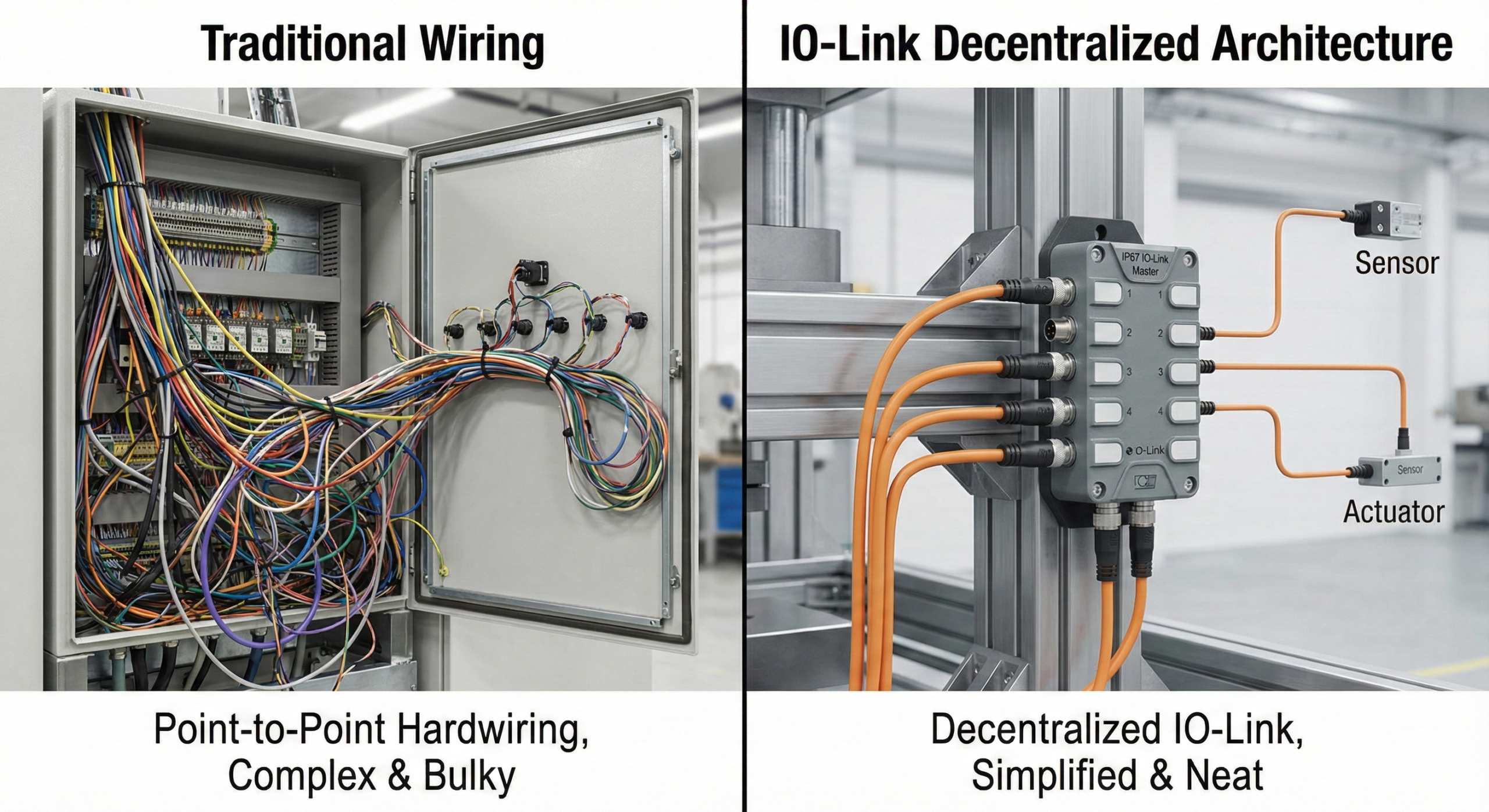
  • What it is: A point-to-point communication protocol that uses the same standard 3-wire cables but transmits digital data packets.

  • Why select it: This is the entry point for IIoT. An IO-Link photo-eye doesn’t just tell you “Object Detected”; it tells you “Signal Strength Weak (Lens Dirty)” or “Sensor Overheating.”

  • Advance Engineers Recommendation: For any new machine build, specify IO-Link masters. It minimizes cabling costs and maximizes diagnostic visibility without needing a high-end IT infrastructure.

Level 2: The Gateway – Getting Data Out of the Machine

Once the data is in the PLC or local sensor network, how do we move it? This is where the “Communication” layer comes in.

Basic: Serial to Ethernet Gateways

  • Technology: Modbus RTU (RS485) to Modbus TCP.

  • Application: Ideal for retrofitting older energy meters or VFDs that only speak serial languages.

  • Selection Criteria: Choose this if you are budget-constrained and simply need to log basic parameters (like Energy kWh) once every minute.

Mid-Range: Protocol Converters (The “Translator”)

  • Technology: Converting Profinet/EthernetIP to a neutral format.

  • Application: Your machine runs on Siemens (Profinet), but your upper-level software speaks Allen Bradley (Ethernet/IP).

  • Selection Criteria: Essential for mixed-vendor plants. Look for gateways that support OPC UA, as this creates a secure, standardized bridge for data.

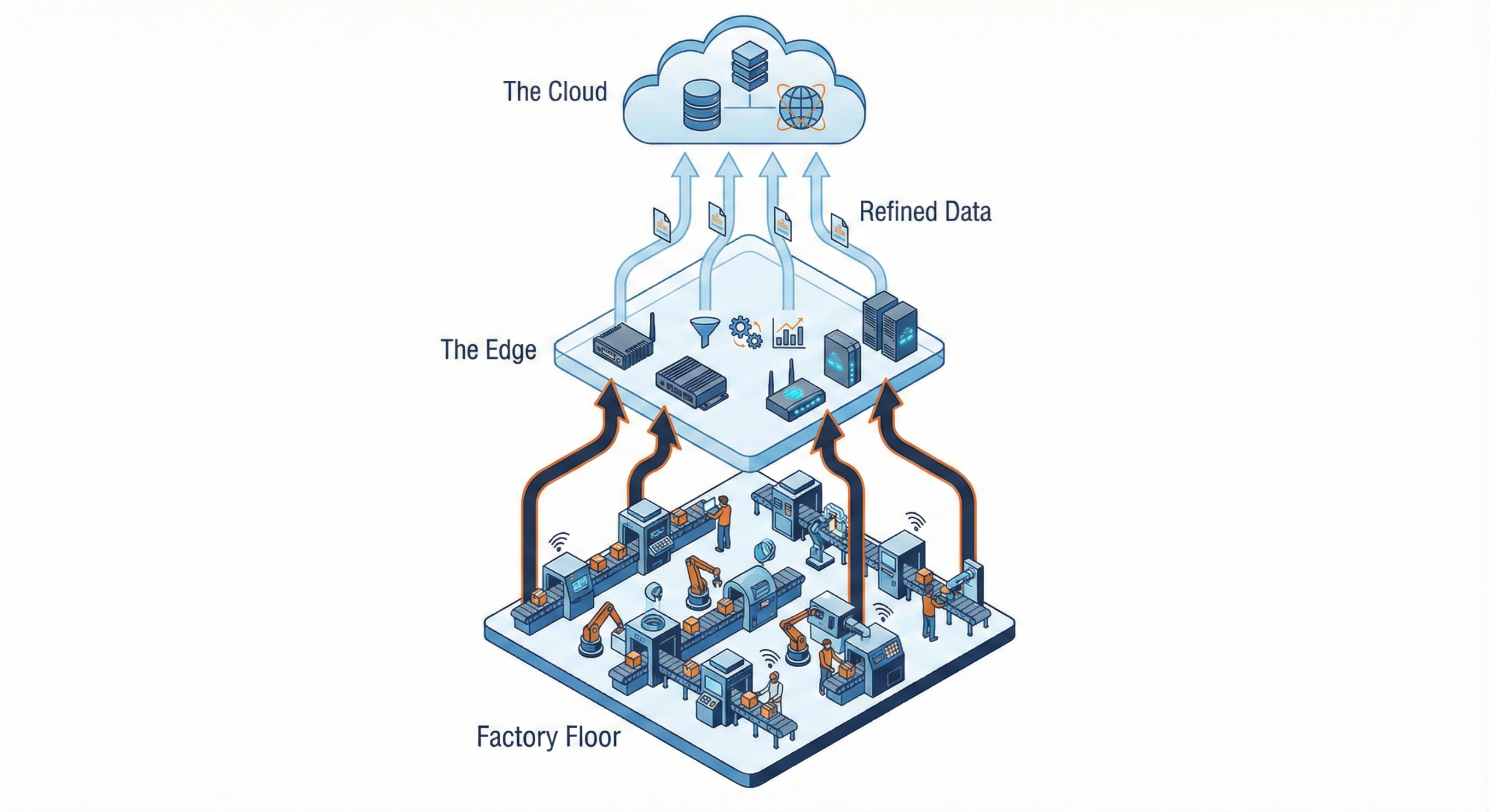
High-End: Edge Controllers

  • Technology: Industrial PCs (IPCs) or Linux-based Controllers (e.g., Raspberry Pi Compute Module Industrial versions, Siemens Industrial Edge).

  • Application: Running logic and data processing simultaneously.

  • Why select it: If you need to process data before sending it (e.g., analyzing vibration capabilities at 10,000 Hz to detect bearing failure), a simple gateway will crash. You need an Edge Controller to “crunch” the numbers locally and only send the result (“Bearing OK”) to the server.

Level 3: The Transport – Communication Protocols

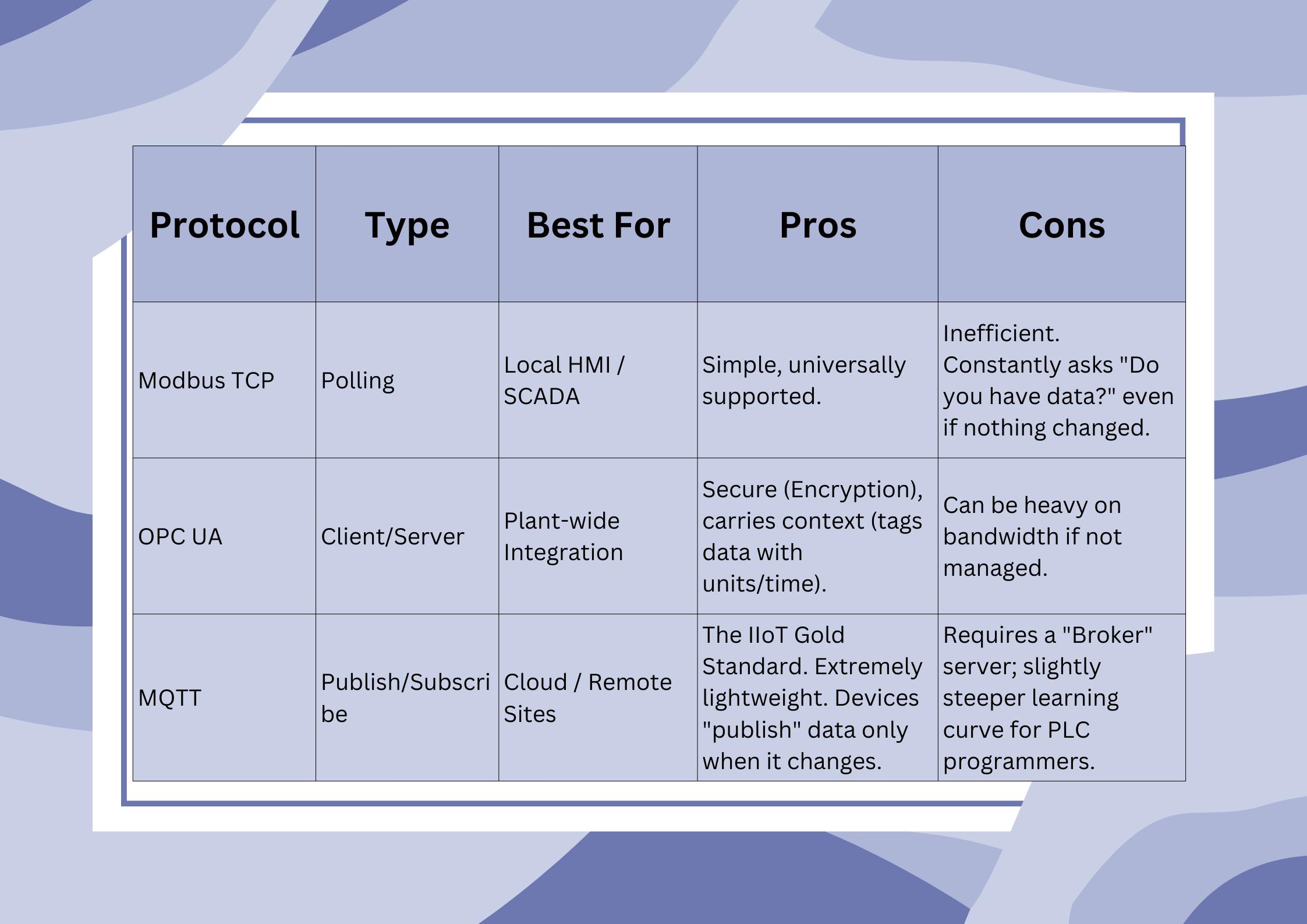
This is the language your system uses to talk to the server or cloud. Selecting the wrong protocol is the #1 cause of network congestion.

Selection Rule of Thumb:

  • Inside the machine (Real-time control) → Use Profinet / EtherCAT.

  • Machine to Plant Server (SCADA) → Use OPC UA.

  • Plant to Cloud / Remote Dashboard → Use MQTT.

Level 4: The Destination – On-Premise vs. Cloud

Where does the data go?

On-Premise Server (Local)

  • Setup: A physical server rack sitting in your IT room.

  • Best for: Companies with strict data privacy policies (e.g., Defense, Pharma) or unreliable internet connections.

  • Advance Engineers Service: We design SCADA systems with local Historians that give you 100% control over your data without a monthly subscription.

Cloud Dashboards (AWS / Azure / Proprietary)

  • Setup: Data is sent securely over the internet to a cloud platform.

  • Best for: Multi-site operations. If you have a plant in Mohali and another in Gujarat, the Cloud allows the CEO to view both on a single dashboard on their phone.

  • Selection: Look for platforms that support “Store and Forward.” If the internet cuts out, the local gateway buffers the data and uploads it automatically when the connection is restored.

Summary Checklist: How to Choose?

When Advance Engineers consults on an IIoT project, we ask these four questions to determine the system “Level”:

  1. Latency: Do you need to know about the data in milliseconds (Motion Control) or minutes (Tank Level)?

    • Milliseconds = Edge Computing.

    • Minutes = Cloud Gateway.

  2. Volume: Are we tracking 50 tags or 5,000 tags?

    • High volume requires MQTT to prevent network crashes.

  3. Environment: Is the hardware going into an air-conditioned IT cabinet or a dusty foundry floor?

    • Foundry = IP67 Ruggedized Gateways.

  4. Security: Will the IT department allow this device on the corporate network?

    • If yes, ensure the device supports SSL/TLS encryption (HTTPS).

The Advance Engineers Advantage

Selecting an IIoT system isn’t just about buying a gateway; it’s about architecture. We help you bridge the gap between OT (Operational Technology) and IT (Information Technology). Whether you need a simple IO-Link upgrade for better diagnostics or a full multi-plant MQTT dashboard, we engineer the solution that fits your reality.

Ready to digitize your factory? Let’s start small, scale fast, and measure everything. Contact Advance Engineers today.

CLAMP ON FLOW METER A CUTTING TECHNOLOGY OF FUTURE – Building Management System

CLAMP ON FLOW METER A CUTTING TECHNOLOGY OF FUTURE – Building Management System

CLAMP ON FLOW METER A CUTTING TECHNOLOGY OF FUTURE – Building Management System

Building management and maintenance, particularly with a keen focus on enhancing efficiency while simultaneously reducing energy consumption and carbon emissions, has emerged as a critical and highly relevant topic in today’s contemporary world. As the global community becomes increasingly aware of environmental issues and the pressing need for sustainable practices, the importance of effective building management systems cannot be overstated. These systems not only contribute to the operational efficiency of facilities but also play a significant role in minimizing the ecological footprint of buildings, which are major consumers of energy and resources.One of the most innovative tools in this realm is the ultrasonic clamp-on flowmeter. These advanced devices are instrumental in promoting both water and energy savings by providing precise monitoring of flows and thermal energy consumption within a building’s pipe network. What sets ultrasonic flowmeters apart is their non-intrusive design, which allows them to operate without interrupting the flow processes. This feature is particularly advantageous for facilities that require constant operation, as it means that the meter can be installed without the need for any shutdowns or interruptions to the utilities. This aspect makes ultrasonic flowmeters the preferred choice for a wide range of clients, including those in essential services such as hospitals, data centers, and commercial establishments that operate around the clock, 24 hours a day, 7 days a week.A well-designed building management system (BMS) effectively deploys flow meters to measure various critical parameters that contribute to overall efficiency. Specifically, these flow meters are utilized to monitor:a) The volume of water entering the facility, which is essential for managing water resources and ensuring that consumption is kept within sustainable limits.b) The airflow being circulated through ducts and vented from buildings, which is crucial for maintaining indoor air quality and optimizing heating, ventilation, and air conditioning (HVAC) systems.c) The gas feed utilized for generating electricity, allowing for better tracking of energy sources and their consumption, which is vital for minimizing costs and managing energy efficiency.d) The hot and cold-water loops, which are integral to various building systems, including heating and cooling, ensuring that energy is used effectively and waste is minimized.The comprehensive measurement of flow rates, in conjunction with temperature readings and power consumption data, empowers building managers to optimize utility usage. This integration of data not only aids in reducing operational costs but also significantly contributes to lowering pollution levels associated with energy production and consumption. By leveraging these technologies and practices, facilities can achieve a more sustainable operational model, aligning with global efforts to combat climate change and promote environmental stewardship.

Advance Engineers, a pioneering process automation company, specializes in delivering innovative solutions in the fields of Instrumentation, Automation, and Fire Safety. With a commitment to excellence and a focus on cutting-edge technology, we empower industries to streamline operations, enhance safety, and achieve optimal efficiency. Our expert team is dedicated to providing tailored solutions that meet the unique needs of each client, ensuring seamless integration and reliable performance. To learn more about how we can elevate your operations, reach out to us today via WhatsApp or Email

ClampOn Flow Meters – Pharmaceuticals

ClampOn Flow Meters – Pharmaceuticals

CLAMP ON FLOW METER A CUTTING TECHNOLOGY OF FUTURE- Pharmaceutical Application

Ultrasonic clamp-on flowmeters offer a highly reliable and hygienic solution in environments where sterility is paramount, adhering closely to the stringent guidelines established by pharmaceutical regulatory authorities. These advanced flow measurement devices are designed to operate without making direct contact with the fluid being measured, which is particularly advantageous in applications where contamination must be strictly avoided. This characteristic not only ensures the integrity of the fluid but also aligns with the rigorous standards set forth in the pharmaceutical industry, where even minute deviations from sterility can lead to significant consequences.A significant challenge arises when measuring the flow of water designated for injection, commonly referred to as Water for Injection (WFI). This specific type of water is crucial for the preparation of injectable pharmaceuticals and must meet exceptionally high purity standards. Conventional invasive flow meters, due to their inherent design and operational mechanics, often create small pockets or dead zones within the system. These pockets can become breeding grounds for microbiological growth, especially under conditions of low flow velocity. Such growth not only compromises the sterility of the WFI but can also lead to contamination of the final pharmaceutical product, thereby reducing the overall sterility level and potentially causing severe health risks to patients.Moreover, another critical challenge in the flow measurement of WFI is its electrical conductivity, which must be meticulously maintained below 2.1 μS/cm at a temperature of 25 °C. This requirement is not merely a guideline but a critical and mandatory specification in the sterile drug production process. Continuous monitoring of this parameter is essential to ensure compliance with safety and quality standards. This necessity poses additional challenges for flow measurement using electromagnetic flow meters, which rely on the conductivity of the fluid for accurate readings. In the case of WFI, where the conductivity levels are kept low to ensure purity, electromagnetic flow meters may struggle to provide reliable measurements, leading to potential inaccuracies in flow data that could affect production quality.The application of ultrasonic clamp-on flowmeters within the pharmaceutical industry is diverse and extends beyond just the measurement of WFI. These devices are employed in various stages of production, including the manufacturing of medicines, syrups, granules, solutions, and mixtures. Their non-invasive nature allows for seamless integration into existing systems without the need for extensive modifications or the risk of introducing contaminants. Furthermore, ultrasonic flowmeters can provide real-time data and monitoring capabilities, which are essential for maintaining compliance with regulatory standards and ensuring the quality of pharmaceutical products. By utilizing these advanced flow measurement technologies, pharmaceutical manufacturers can enhance their operational efficiency while simultaneously safeguarding the sterility and integrity of their products.

Advance Engineers, a pioneering process automation company, specializes in delivering innovative solutions in the fields of Instrumentation, Automation, and Fire Safety. With a commitment to excellence and a focus on cutting-edge technology, we empower industries to streamline operations, enhance safety, and achieve optimal efficiency. Our expert team is dedicated to providing tailored solutions that meet the unique needs of each client, ensuring seamless integration and reliable performance. To learn more about how we can elevate your operations, reach out to us today via WhatsApp or Email